

Flowering crabapple trees, with single to double blooms of white, pink, or carmine, are a beautiful symbol of springtime. Varying widely in form, cultivars range from small upright trees 15 feet tall to umbrella-like specimens more than 30 feet across. Some form narrow columns; some are weeping. Many produce small, ornamental fruit that lasts all winter, in shades of yellow, orange, or red. The simple green leaves of some varieties may have a reddish cast, especially in the spring. ‘Indian Summer’ is an example having orange fall foliage. ‘Molten Lava’ has attractive yellow bark. With over 200 cultivars available, you can choose a tree that matches your site and provides four seasons of garden interest.
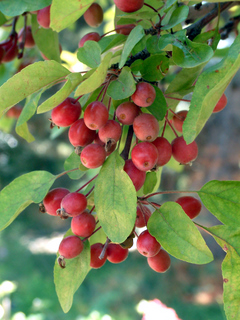
Crabs can be longer-lived and are hardier than other flowering fruit trees. The biggest problem in Colorado is fireblight, a bacterial disease which can disfigure and eventually kill the tree. The best prevention is to choose one of the many disease-resistant varieties. The trees tolerate a range of soil types as long as they have good drainage. Plant them in a moderate water zone. Only minimal pruning is required, to remove suckers and correct shape.
Their smaller size makes crabapples good candidates for small yards. They may even be espaliered against a fence. Consider planting them where fruit drop will not be a problem, although they also make good lawn trees.
[This article was first published in the Colorado Springs Gazette on April 25, 2007.]
 Mountain Plover