
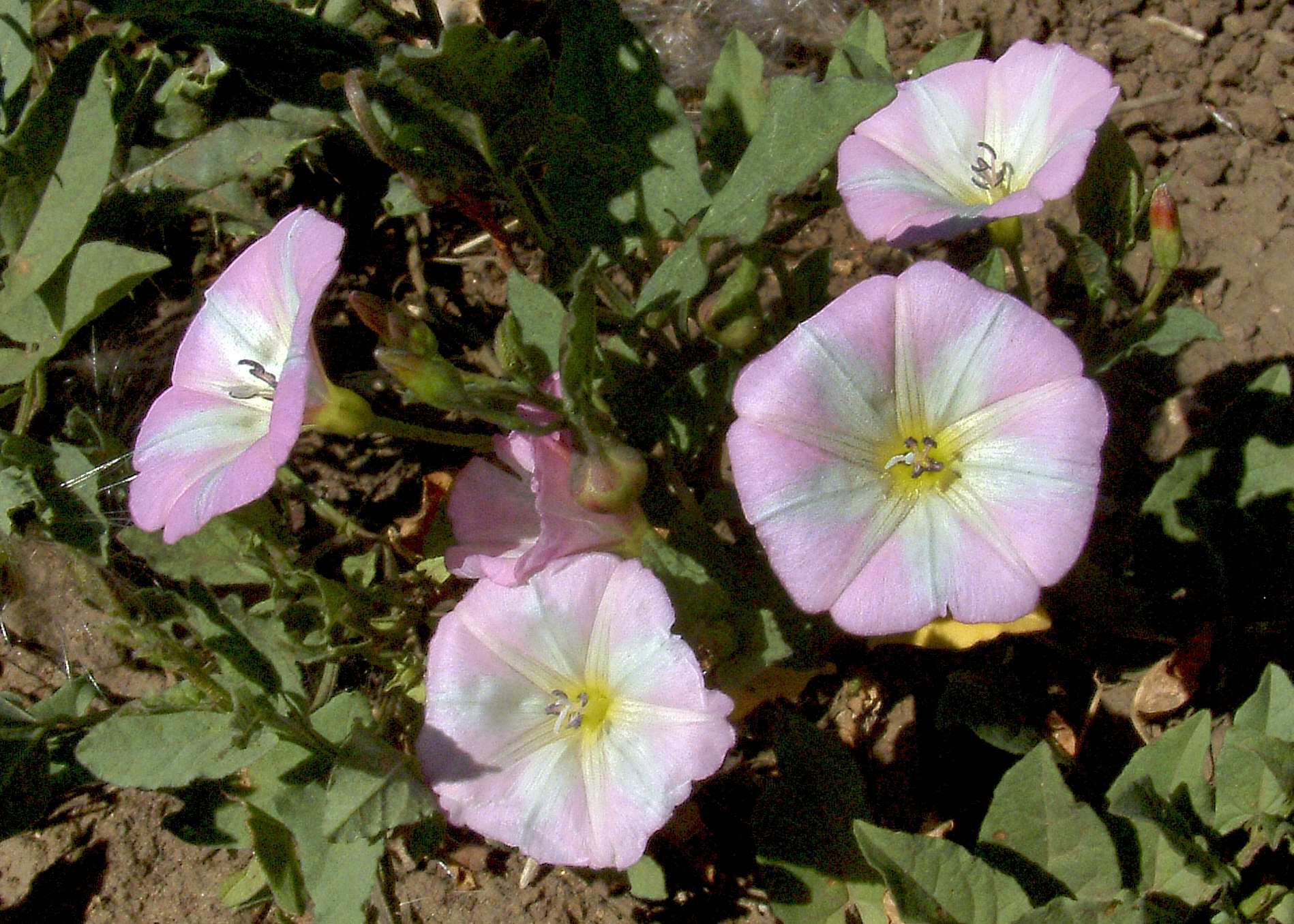
 Most gardeners are all too familiar with bindweed, a member of the morning glory family. With its white to pink vase-shaped flowers and elongated green leaves, it spreads its twisting vines across areas of disturbed soil, such as vegetable gardens and flower beds. The more the gardener tries to pull it out, the more it spreads. Reproduction is by seed, which can remain viable in the soil for up to 50 years, and creeping rhizomes, which may extend up to 6 feet from the mother plant.
If that doesn’t scare you, consider that established plants have a taproot that can extend 20 feet below the soil surface, and lateral roots that grow 30 feet long! This root system stores enough food to keep the plant alive for three years, even if the area above it is paved over. Repeated applications of herbicides may not kill those roots. Once an area is covered by bindweed, it is almost impossible for native plants (or anything else) to become established.
 With the weather swinging wildly between winter storms and balmy sunny days, it must be springtime in the Rockies. The snow reminds us that it’s much too early to plant, but the warm days in between beckon us outside. What’s an antsy gardener to do? Happily, there are things you can do to prepare for the gardening season. Unhappily, one of the most important chores is weed control.
 Mountain Plover