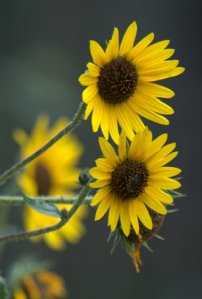
 This year, the birds planted themselves a garden.
I have half a dozen bird feeders scattered around our yard. Some hold millet, others contain suet, and a small feeder near the house is full of tiny, black nyjer seeds specifically for the goldfinches and Pine Siskins. But the most popular feeders are the ones full of black oil sunflower seeds.
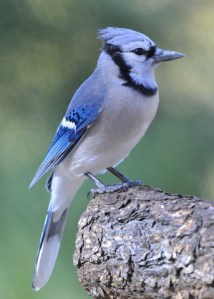
House Finches, jays, nuthatches and chickadees, magpies, grosbeaks—all are attracted to the sunflower seeds. (So are squirrels, but they only get the spilled seeds on the ground.) While the finches sit contentedly on the feeder, munching away, the jays, nuthatches and chickadees tend to swoop in, grab a seed (or three, in the case of the jays), and hightail it to the relative safety of a convenient branch. There they open the shell and extract the seed before returning to the feeder for their next bite.
(more…)

 At some time of another, most birders have a “nemesis bird”—that species you really want to see but you always seem to show up a minute too late. Or you show up in the wrong spot. Or you hear, “We always get that bird on this trip; I don’t know why it’s not here now!”
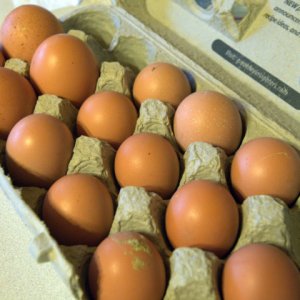 After a fox attack last spring, we’re down to only three aging hens and six five-month-old pullets. Instead of giving eggs to all our friends, I’ve had to buy them at the market. So this morning, after being out of town for the weekend, I walked out to the coop hoping to find an egg, or maybe two. Instead, there were close to a dozen!
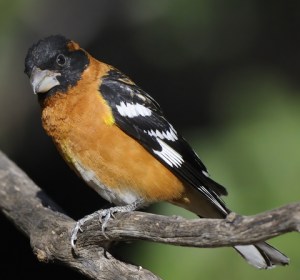 Male ducks don’t look anything like female ducks, at least during the breeding season. And you can easily tell the boy Black-headed Grosbeaks (right) from the girls (below)… in fact, they don’t look like they even belong to the same species! But with lots of birds, from Steller’s Jays to Canada Geese, it seems that only they know who is who.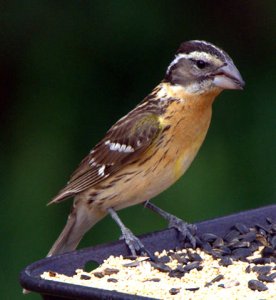
 It’s time to clean out the chicken coop. All summer my little flock has been happily picking weed and grass seeds out of the straw I spread in their coop last spring. At the same time, they’ve broken down the big pieces of grass stem into finer shreds. And, best of all, they’re balanced all that carbon with some nice, hot chicken manure.
 Honk, honk
 Yesterday morning, I went out to tend my flock, and realized that my new pullets, hatched around June 1, were nearly the same size as my mature hens. When they were mere children, they fit just fine in their twelve square foot cage (above). (For their safety, it’s important to separate young birds from the main flock.) Now, however, it was clear that they needed more room. Although I had planned to wait until next month, I decided this was the time to release them into the main coop.
 In an attempt to improve my skills, I’ve signed up for a Wildlife Photography class at our neighboring community college. I have starry-eyed visions of rutting elk, growing grizzlies and other impressively large mammals adorning the paneled walls of our family room, not to mention the pages of Outdoor Photographer or National Geographic.

