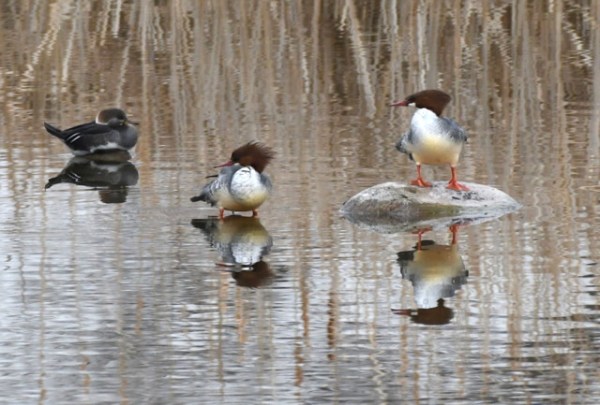
Birding in Winter

Common Merganser_Winter Bird Count_FCNC-CO_LAH_2471-001

I have a tendency to be a fair-weather birder. Give me warm, sunny days, balmy breezes, and sparkling blue ponds and lakes. Trees are full of leaves, bugs, and birds. With all the summer migrants in town, trip lists run long. Singing males are easier to spot, and the rituals of mating and raising young, offering additional opportunities for the wildlife photographer.

It has taken me a long time to appreciate winter birding. Temperatures dip below freezing and it may snow. Roads can be treacherous, providing unwanted excitement just getting to the birding destination. Many birds have heeded to call to migrate, and those left behind tend to be drab, matching the winter landscape. And then there’s the silence. I hear no songs, not even much chirping. Yes, there are birds out there, but where?

And yet…
(more…)

January Bird Quiz

With the start of a new year, I thought I might do something a little different with the monthly quiz. No, I’m not going to tell you what it is. You’ll figure it out eventually!

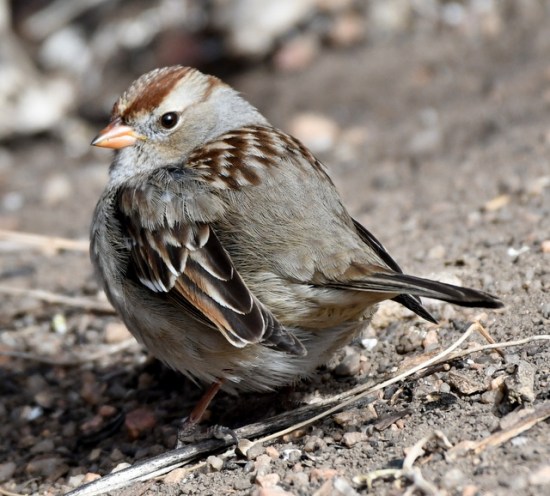
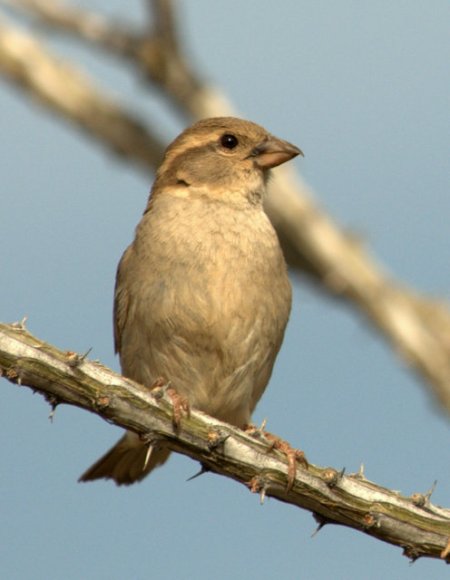
This year the photos won’t be cropped. Instead, I’ll start you out with an easy one. This bird was photographed in Arizona in April. Can you identify it? The answer appears next Monday.

01 Tucson-AZ_LAH_4467

Footsies

Great Egret feet_HomosassaSP-FL_LAH_8290

When out in the field identifying birds, how often do we look at the feet? For me, at least, the bird’s feet may be the last thing I take note of—if I can see them at all. Wading and swimming birds keep their feet under water and out of sight, and mind. Perched birds’ feet are often hidden in the foliage, or too small to see from a distance. Yet, bird feet can provide a clue, not just to a bird’s identity, but also to its habitat, diet, and general lifestyle.

(more…)

Looking for Birds, and Fish

One of my favorite birding sites, especially in winter, is Eleven Mile Canyon, near Lake George, Colorado. It may seem odd to head up the mountain—to over 8,000 feet—in winter, but I’d rather have cold than crowds of people camping, picnicking, and especially fishing. Besides, the stream runs even in the most frigid conditions, at least under the ice. Typical sightings include Bald Eagles, Common Ravens, Mountain Chickadees, Song Sparrows, and always American Dippers.

(more…)

Wings

One of the delights of living near the US Air Force Academy is watching the various ways the cadets get into the air. There are the small training planes, the gliders, and the air mattress-like parachutes. Every so often, most often during football season and at graduation, we’re treated to an old bomber or two. And then there are the incredible Thunderbirds, whose aerial display comes right over our house. What a view!

Of course, you can immediately tell when the Thunderbirds are in town—you can hear their screaming engines echoing off the Front Range mountainsides. (If you want to actually see the jet, look far ahead of the point  where the sound seems to be originating.) But let’s eliminate the sound for a moment. How can you identify a single-engine prop plane from a glider from a parachute from a jet? Easy—look at the shape of the wing.

(more…)

It’s a Bird, It’s a Plane…

Red-tailed Hawk_ElPasoCo_LAH_9836r

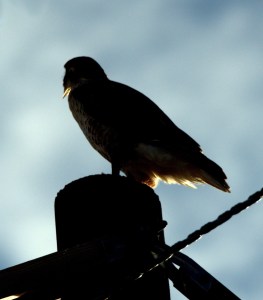
I thumbed through the field guide. Let’s see… a Red-tailed Hawk is 19 inches, head to tail, with a wingspan of 49 inches. A Rough-legged Hawk is a couple of inches longer, 21 inches tall with a 53 inch wingspan. And a Ferruginous Hawk is larger still, 23 inches tall and 56 inches across.  Or, it could be a Northern Harrier, checking in at 18 inches by 43 inches. So which hawk was it sitting on that pole, silhouetted against the sky? I was glad that there were only a few real options in eastern Colorado at this time of year.  I flipped the page to a Golden Eagle, 30 inches in height, wingspan of 79 inches. No, surely I’d be able to tell if the bird was that large! It had to be a hawk.

(more…)