Birding Down Under, Part 2

(Don’t miss Part 1, which I posted last Monday.)

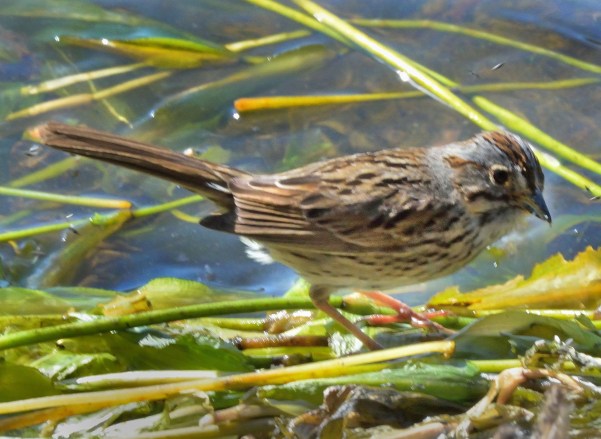
It wasn’t difficult to find birding hotspots to explore. During a visit to the town of Katoomba, I took a short trail leading from Wentworth Falls to the “car park” and turned up an assortment of species, including a Golden Whistler (above, left) and an Eastern Spinebill (above, right). (more…)

Birding Down Under

katoomba-nsw-australia_lah_5599If you could go birding anywhere in the world, where would you go? That was the question my husband asked when he presented me with a pile of frequent flyer miles and credit card points for my 60th birthday. There are so many choices, but after months of careful research, I chose Australia. I wasn’t disappointed. Birding Australia was truly a once-in-a-lifetime experience.

After far too many hours in the air, we landed in Sydney just as the sun was setting. Our friends picked us up and drove us an hour or so west to their home in the Blue Mountains, where we planned to stay for a week. Exhausted from the flight, we went straight to bed. But early the next morning, lying in the predawn dimness, I heard a chirp. And then another. A bird started singing, and was quickly joined by several more. A minute later I was up, dressed, and downstairs with my camera, binoculars, and Field Guide to Australian Birds. I was in Australia!

(more…)

Black Widows

widow_cottonwoodcyn-comanchenatlgrasslands-co_lah_6041The black spider crept across the basement floor, venom glistening from its deadly jaws. While the unsuspecting heroine rummaged through some boxes, the spider crept closer, and yet closer, until…

It’s a familiar scenario for a scary movie, but there isn’t much truth to the image of the malevolent black widow stalking its human prey. Yes, these spiders are venomous, and yes, they can bite us and do damage. But Black Widows really need a new image. They’re actually shy and retiring creatures who desperately want nothing to do with us humans.

(more…)

Extraordinary Eggs

eggsWe all know what a chicken egg looks like—hard shell, gooey clear stuff inside that turns white when you cook it, yellow yolk in the middle. You may have noticed that twisted “umbilical cord” and maybe you fished it out before frying your breakfast. If you break an egg into a bowl, you’ll find that the white (the albumen) has a thicker part around the yolk, and a thinner part further out. And if you’ve ever peeled a hard cooked egg, you might remember two layers of translucent membrane just inside the shell—removing them as you go makes it easier to get the shell off.

But have you ever really looked at an egg? Wondered what all the parts do? An egg is actually an amazingly sophisticated way of protecting and providing for a developing bird embryo.

(more…)

Name that Bird!

Secretarybird_DenverZoo_LAH_1574We’ve given birds some pretty bizarre names. Does the Secretarybird (right) take notes? Who does the Wandering Tattler tattle on? Do chatterers and babblers ever shut up?

Then there are the names that must have come from examining a stuffed specimen in hand. How often do you see the orange crown of an Orange-crowned Warbler?

(more…)

Pishing, Hooting, Playing a Recording

250px-Laterallus_jamaicensis_USGSYou’re out birding at the local marsh, facing a sea of cattails and reeds. Somewhere in that vast expanse is a Black Rail. How in the world are you going to find it? What are the odds of it sauntering out of the dense growth right in front of you? If left to their own devices, very few Black Rails—and other very secretive birds—would show up on any birders’ life lists.

Birders do check off rails—and Swainson’s Warblers, nocturnal owls, and other hard-to-find species. Frequently these birds are prodded into announcing their presence by the use of recordings.

(more…)