
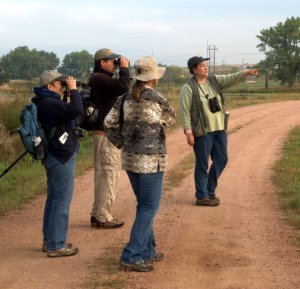
 If you missed Part 1, I’m summarizing some observations made by our daughter, the anthropologist, about our birding tribe.
Language
Any interest group will have it’s own special vocabulary, and birders are no different. For example, there’s a difference between birdwatchers, birders, and listers (or twitchers, if you’re British). Each word has its own nuance. “Birdwatchers” are recreational birders, enjoying birds wherever they find them but not really going out of their way or keeping track of what they’ve seen. They may actually have the most fun, since there’s no pressure and they take the time to really look at the birds they see.

 Anthropologists, being scientists, are good at taking complex topics and breaking them down into manageable pieces. Whereas my husband views birders as nice-but-slightly-eccentric people, our anthropologist daughter dissects us into pieces—clothing, rituals, language, and the like. I took notes and came up with this list. Although our daughter is not, herself, a birder, I think she knows us pretty well. What do you think?
 The first thing most “normal” people notice about a group of birders is what we’re wearing. A floppy hat is essential for keeping the sun out of our eyes and preventing sunburn. A few hat pins are acceptable decoration, especially if they’re from exceptional birding locations. Beige or green pants and shirt are popular, as are vests with lots of pockets. Tennis shoes are fine, but comfortable hiking boots are preferred. Practicality trumps fashion, but we do have a dress code: nothing flashy, blend in with your surroundings, be prepared to be outdoors. A t-shirt with a bird on it is good, and you get extra points if the design is funny.
 Aliens have invaded Colorado. Once again, a non-native species has moved into our territory and established a thriving population. In this case, it’s the European Paper Wasp (left). You can read all about it at the Colorado State University Extension
 Chickens can be pretty darn mean. The terms “pecking order” and “henpecked” have a firm basis in how a chicken society operates. Like many other animals—wolves and elephants come immediately to mind—there is an alpha chicken (left) who literally rules the roost. Every other bird knows its place too, which (most of the time) results in peaceful coexistence.
 Since my flock lacks a rooster, we have a queen hen. The other hens kowtow to her. She is always first to grab the scraps I toss into their coop, and the first to sample the fresh water when I clean their basin. And then there is the poor biddy in last place (right). She’s lacking feathers in a number of spots, not because she’s molting, but because the other hens pull them out.


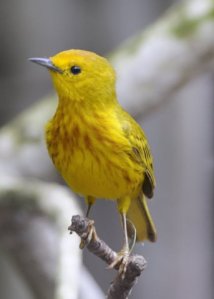 The sun is starting to color the eastern sky, although it won’t appear over the horizon for almost another hour. Flocks of songbirds that have been flying all night finally give in to the overwhelming need for food and rest before resuming their northward migration.
