

Can plants hear? At first glance, this seems like a silly question. Plants don’t have ears, so of course they can’t hear. But wait—do organisms need ears to hear? What is hearing, anyway?
Given that sound consists of a series of vibrations that are propagated through air, water, or another substance, then hearing must be the ability to sense those vibrations. And while our ears are very good at sensing vibrations, there are other options.
 Color. It’s probably the primary reason we grow flowers. Yellow daffodils and red roses, irises in every color of the rainbow. Without flowers, our yards would be much more subdued. Gardeners rejoice in the options available, but why do flowers come in so many colors in the first place? What do they get out of it?
 It’s a common question. You’ve just planted a new tree. In the process, the plant has lost a significant portion of its roots—sometimes up to 95 per cent! Should you prune back the crown to compensate?
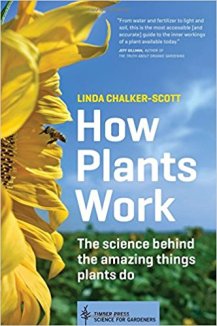 New gardening books seem to pop up as regularly as springtime dandelions. Most simply rehash what has been said before—perhaps with a new twist or better photos. But How Plants Work: The Science Behind the Amazing Things Plants Do (Science for Gardeners) isn’t your typical treatise on how to grow what. Instead, the author, Linda Chalker-Scott, explains the “why” behind the “how.”

 For many of us gardeners, poinsettia plants are an essential element of our Christmas decorating. I love the huge displays at church and in the stores, even if I don’t have room for that many in my home. I’ve written about how to keep the plants alive (see my 2012 post on “
 The tree had clearly expired. What leaves remained had turned a sickly yellow-brown, and hung limply on the branches—in mid-August! Yet, when our neighbors planted it last year it had been perfectly healthy. Something was obviously wrong, and I had a hunch I knew what. (I’ve often said that master gardeners kill just as many plants, we just know why they died.)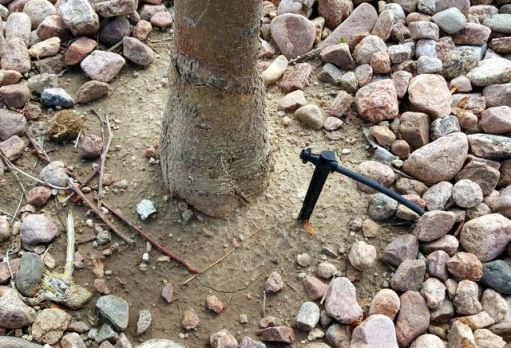
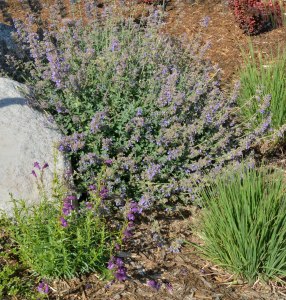 You’ve read the instructions; I’ve used them frequently here in my posts. “Drought resistant once established.” Sounds good—we’re always trying to save water—but how should you water these plants to start with? And what does “established” mean?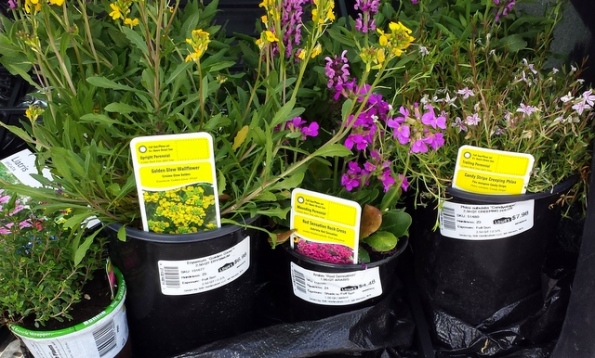
 Mountain Plover