
Appearance
 With its ostentatious white flowers clamoring for your attention, Boulder Raspberry impresses like a hybridized cultivar, rather than a native shrub. Growing three to five feet tall and six feet wide, arching, sprawling stems carry bright green, lobed leaves that turn yellow in fall before dropping for the winter. Spring’s blooms develop into small reddish purple fruit resembling cultivated raspberries. While edible, the berries are generally considered unpalatable. However, they will attract birds and other wildlife to your garden. Unlike other raspberries, the stems are thornless.
Category: Plant Profiles
All about specific plants.
Landscaping with… Zucchini?
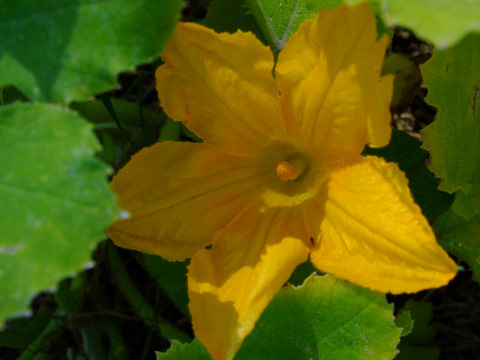 Roses, petunias, and … zucchini? Why not? While traditionally grown in a vegetable garden, summer squash’s striking appearance can provide a focal point for an ornamental border as well.
Zucchini and its relatives have large lobed leaves, blotched with white, supported by thick prickly stems. Big yellow flowers produce squash in an amazing variety of colors and shapes. Of course they’re edible—but they’re eye-catching as well. Just make sure you leave plenty of room. “Bush” squash plants grow four feet wide and two feet high.
Yarrow (Achillea)
Appearance
 Common Yarrow might be common, but it’s still a worthy plant for Colorado gardens. Plants form spreading clumps of dark green, finely cut leaves about one foot tall. Flat-topped clusters of tiny flowers that rise above the greenery provide landing places for butterflies, which are attracted in large numbers. Blooms may be white, pale to golden yellow, or various pastel shades; ‘Paprika’ is a cultivar with red flowers the color of their namesake.
Seeds You Can Sow Now
Warm sun beckoned me into the garden. The aroma of wet, decaying leaves mingled with the earth scent of garden loam, filling my senses as I pulled back the mulch that had protected my planting beds all winter. It was one of those breath-taking days in early spring when you finally believe that winter might be over.
I was anxious to get started, but the forecast still called for freezing nights, with a chance of snow later in the week. I stared at the empty soil… and that’s when I noticed the seedlings. Amazingly, tiny green shoots were pushing out of the ground, even where snow lingered in the shade. What could be germinating now? Two of my favorite plants!
Bachelor Buttons
 I’m a sucker for anything that blooms blue, and bachelor buttons are undeniably blue. There’s even a shade of blue named after their alternate, and perhaps more familiar, name—cornflower blue. Although white and pink varieties are also available, they don’t interest me in the slightest.
Bindweed
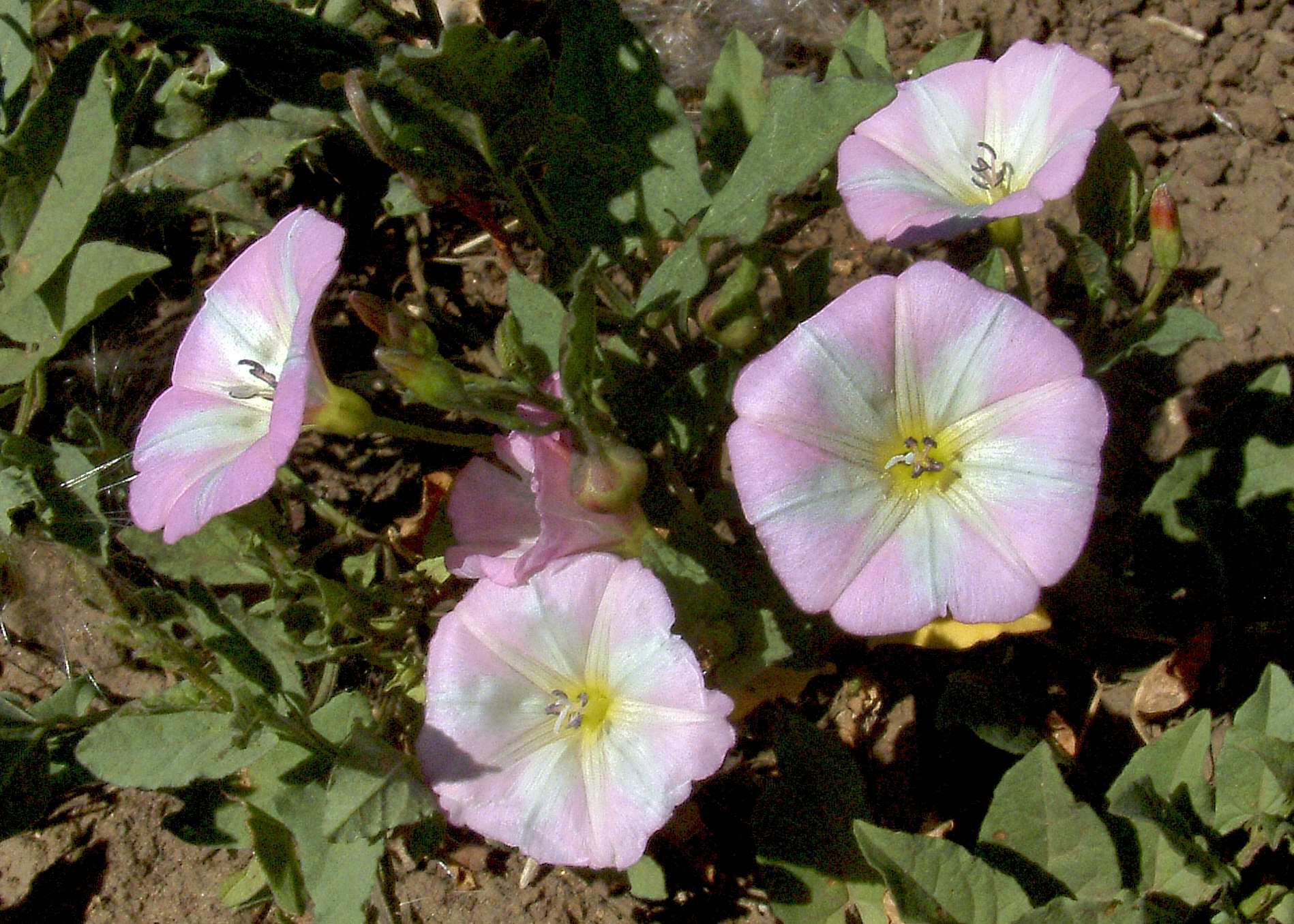 Most gardeners are all too familiar with bindweed, a member of the morning glory family. With its white to pink vase-shaped flowers and elongated green leaves, it spreads its twisting vines across areas of disturbed soil, such as vegetable gardens and flower beds. The more the gardener tries to pull it out, the more it spreads. Reproduction is by seed, which can remain viable in the soil for up to 50 years, and creeping rhizomes, which may extend up to 6 feet from the mother plant.
If that doesn’t scare you, consider that established plants have a taproot that can extend 20 feet below the soil surface, and lateral roots that grow 30 feet long! This root system stores enough food to keep the plant alive for three years, even if the area above it is paved over. Repeated applications of herbicides may not kill those roots. Once an area is covered by bindweed, it is almost impossible for native plants (or anything else) to become established.
Aubrieta deltoidea
Appearance
 After months of dreary landscapes, Aubrieta’s vibrant purple flowers bring welcome color to the April garden. The diminutive blossoms have four petals arranged in a cross, with a clump of yellow stamens in the center. In early spring, they bloom enthusiastically, completely hiding the low growing mats of evergreen foliage. The plants only reach six to twelve inches tall but they can extend as far as two to three feet wide.
Lenten Rose, Hellebore
(Helleborus orientalis and hybrids)
 Lenten Roses are a welcome sight after a long, lifeless winter. Hardy between USDA zones 4 – 8, they are among the earliest flowers to bloom., emerging from clumps of attractive, evergreen foliage about two feet high and 15 inches across.
The colorful sepals come in shades of green-white, through mauve pink and plum to a deep wine red. Some newer hybrids add a pale yellow to the mix. (The inconspicuous petals act as nectaries, luring bees with their sweet nectar.) Blooms come in single or double forms. Recently, breeders have developed cultivars with an open, anemone-type flower.
Originally native to Eurasia, all Hellebores are dangerously poisonous. From their roots, ancient cultures created medicines used to treat paralysis, gout, and especially insanity. It was frequently used as a purgative. Historians believe an overdose of Hellebore may have killed Alexander the Great. As some people are sensitive to the sap, it’s a good idea to wear gloves when tending your plants.
Durable Plants for the Garden: a Review
 If you garden in Colorado, you should own this book. If you garden anywhere in the high, dry west, you should own this book. It’s that simple.
Gardening along the Front Range isn’t for wimps. Rainfall is sparse. Leaves scorch in the harsh sunlight. Weather is capricious. Soils are lean and hungry. And then there are the critters—deer, rabbits, pocket gophers—who come looking for a salad bar.
If you’ve dealt with our high winds, decomposed granite (mixed with studio-quality clay), Saharan humidity, and apocalyptic hail, you know that plants have to be sturdier than Everest and more determined than the IRS to survive.
This book introduces you to the superheroes of the plant kingdom. It’s a guide to Plant SelectTM winners.
Angelina Stonecrop – Sedum rupestre ‘Angelina’
 Angelina Stonecrop is a garden asset all year long. In summer, the low-growing succulent forms spreading mats of cheerful yellow-green, adorned with clusters of yellow star-shaped flowers. These blooms attract butterflies. But it is in winter that Angelina really shines, when those same fleshy leaves turn an incredible, brilliant orange, with subtle shades of red and yellow. The colors are so intense, the ground appears to be on fire. Such a show would be welcome at any time, but is especially appreciated when everything else is dead or dormant.
Tropical Flowers in January?

What plant thrives indoors, shrugs off low humidity, and blooms all winter in bold shades of white to pink to red? Surprise! It’s wax begonias!
Also called fibrous begonias, these familiar bedding plants have large, round succulent leaves in either lime green or a beautiful burgundy- or bronze-red. Flowers have fleshy petals surrounding a bright yellow cluster of stamens. Plants grow to a height of about six to twelve inches. They tend to flop, creating a solid mass of color, and even trailing over walls and container edges.
 Mountain Plover