
 There’s “only” 55 more days until Christmas. Catalogs are pouring into our mailbox. Most go straight into the recycling pile, but a few I set aside, saving them for a break in the holiday frenzy. I don’t keep the gift catalogs, or the home décor catalogs. I only save the important catalogs… the seed catalogs.
The gardening season is over for the year, but next season’s garden is already germinating in my mind. Regimented rows of bush beans spread their leaves toward the spring sun, lettuce forms tight rosettes and huge broccoli plants are crowned with enormous heads of perfect buds. No hail has punched holes in the leaves; hungry cutworms have yet to fell a single stalk.
 “Don’t throw that away!”
 Carrots, on the other hand, are usually planted a week or two before the average last frost date. The cool temperatures and snow-damp soil help keep the seeds from drying out during the three weeks it takes them to germinate.
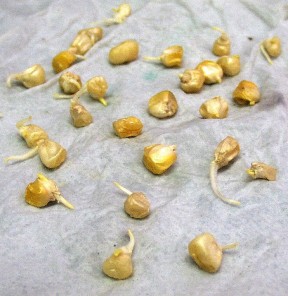 Vegetable seeds will germinate with or without soil. All they really need is an infusion of water to swell the seed coat, and sufficient warmth to signify spring. In fact, seeds for our most commonly grown food crops are among the easiest to start. They will begin their growth on a paper towel, a bed of agar, or even while still inside the fruit where they were formed! The home gardener can put this fertility to good use.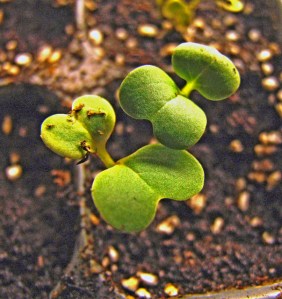
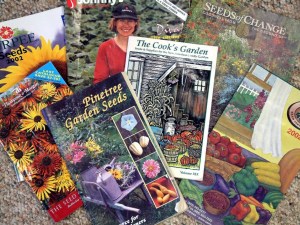 The seed catalogs that arrived around the first of the year are now well-worn, with pages dog-eared and varieties circled. I spent blissful hours going through every one, comparing glowing descriptions and luscious photographs. Having a pre-determined planting list
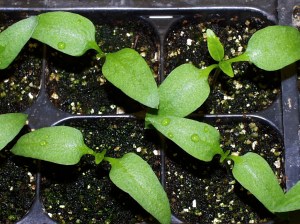 Of course, you can buy started seedlings at your local garden center. But where’s the fun in that? I prefer to take advantage of the wider selection of varieties found in the seed catalogs. I want seedlings that are stocky and healthy, not leggy and root-bound. Plus, there’s a certain satisfaction in knowing that you grew your plants yourself.
 Mountain Plover