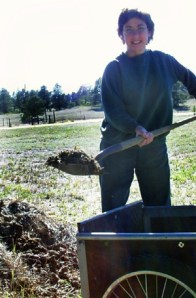
 I keep talking about dirt. That is, I seem to have a soil fixation. Perhaps that’s because gardens begin with the soil. Properly prepared soil produces healthier plants, reducing the need for chemical sprays and fertilizer, and making more efficient use of water. Last May I discussed what soil is, and how to amend it. Today I want to expound a bit on the various types of amendments. I’ll also repeat myself a bit. That sort of thing happens as one gets older.
While living along the Front Range has many benefits, our soils are really pretty pitiful. Unless you are content growing a limited number of native plants adapted to this area, you’re going to have to improve on nature. What’s an environmentally responsible gardener to do?
In new plantings, it is worth spending a little time and money for a soil test. Knowing what your soil has, and what it lacks, helps you avoid many time-consuming and expensive mistakes. Follow the test result directions to maximize fertility and soil health. There are natural materials available to raise your levels of nitrogen, potassium, and phosphorous.
(more…)


 Spending time now on chores such as weeding and garden cleanup will reward you many times over when spring arrives.
 Making your own compost is a great way to recycle yard waste that would otherwise end up in a landfill. It’s the epitome of green gardening, and it’s really not that complicated.
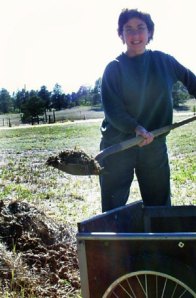 You can easily increase the percentage of organic matter in your soil by adding compost or another organic amendment. This added humus will act as a sponge, increasing water retention in sandy soils. On the other hand, in clay it acts to improve drainage by increasing the size of air and water spaces. Plus, organic matter works with your fertilizer by holding nutrients in a form that is available for absorption by roots. As you can see, organic matter is an important component of healthy soil.
 Actually, dirt is just one component of what gardeners prefer to call “soil.” Rocks weather and break down into smaller rocks, pebbles, gravel, and finally sand and silt. These tiny particles mix with organic matter—decomposing plants and animals—called “humus.” Then there’s air, and water. Add in weed seeds, worms, bugs, and a huge variety of microorganisms, and you have the living stuff in which we plant our gardens.
 Mountain Plover