Green is for Gardens

aquilegia-caerulea-blue-columbine-cottonwood-pass-summit-15july05-lah-005“The Green Guide, National Geographic’s source for greening your life.” “Green Home—everything you need to create a healthy home environment.” Green-collar jobs, green building, and green news. Green is certainly the color of the decade. Yet, long before green became such a household buzzword, gardeners were growing green plants. Isn’t gardening the original green industry?

Gardening is a partnership with nature. Therefore, it is only fitting that we create our landscapes with an awareness of how our actions in our gardens impact the environment. Over the next few months, I plan to post a series of articles on how to garden green. Hopefully my list will inspire you to come up with ideas of your own. I’d love to hear your input.
dsc_7100Green gardening requires an understanding of ecology. What vegetation would naturally grow on this site? What stress factors do these plants need to cope with? Will the plants grow in sun or shade? Is it windy? How hot and cold will it get here?  How about yearly rainfall? Is the ground level or sloping? What is the soil like? Is it acidic or alkaline, clay or sand? What bugs or other animals eat plants in this area? Understanding how plants grow, and how they are adapted to their surroundings, lets us choose a landscape in harmony with nature.

(more…)

Hand-Pollinating Zucchini

It’s time to learn about sex. Oh, you think you already know all about that? OK, but how much do you know about making baby zucchinis?

Perhaps your zucchini (or other squash) plants are producing plenty of flowers, but no squash. Or, maybe they start to grow little squashes but then the babies turn yellow to brown, get all wrinkled, and fall off. What’s wrong? It’s highly likely the problem involves zucchini sex.

All squash plants (and related crops such as cucumbers) produce two kinds of flowers, male and female. Here’s how to tell them apart:

zucchini-blossom-male-femalecsu-23jul04-lah-033s

(more…)

Perennial Sweetpea – Lathyrus latifolius

lathyrus-latifolius-perennial-sweetpea-home-lah_5796Perennial sweetpea is a lovely, old-fashioned flower—one that grandmother might have grown. The keeled pea blossoms, ranging from a blushed white to a deep rose pink, form a clump atop long stems. Lanky vines sport sparse foliage. Bloom will continue from now until early fall if spent flowers are removed. If left to mature, the round, spiral pods will suddenly twist open, flinging their seeds several feet into the air, and sowing plenty of new vines in your garden.

lathyrus-latifolius-perennial-sweet-pea-home-lah-010While the more familiar annual sweet peas don’t do well with Colorado’s wild weather gyrations, this perennial form thrives here. The plants are long-lived, growing six feet long by the end of summer and then dying back to the roots in winter. They cling with tendrils, so some supportive netting is helpful.

Difficult to find as plants in nurseries, perennial pea is easily started from seed. Soak the seeds overnight to hasten germination and then plant in average garden soil in full sun to part shade. Go light on the watering.

With their cottage garden appeal, the vines combine well with clematis and roses, or you can grow them on a fence. They are also suitable as cut flowers. The only drawback is that the blossoms lack the wonderful fragrance of the annual sweet peas.

Grow a Garden of Eatin’

264-wheelbarrow-of-veggies-closeupDo all the fresh veggies appearing in the local farmers’ markets have you inspired? Victory gardens are back in style. Maybe it’s the economy. Growing your own can save you money, although your initial investment may take several years to pay off. Or perhaps you want to plant crops that are normally expensive at the market.
Gardening is good for you. You control which chemicals (if any) you use in your garden. Plus, it provides a great excuse to go outside and get some exercise.

(more…)

Swallowtail Butterflies—and Parsley, Too

black-swallowtail_david-cappaert-michigan-state-university_5255023
Photo: David Cappaert, Michigan State University

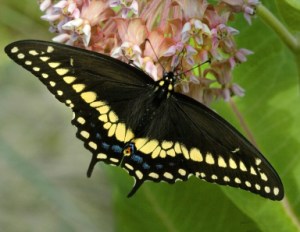
Like an bejeweled flower, the butterfly fluttered around my garden, never stopping to rest, moving from blossom to blossom until it gently drifted over the fence. I love watching butterflies flutter by, but feeding their caterpillars is another matter. I don’t want to sacrifice any of my garden plants to hungry mandibles. In at least one case, at least, I’ve discovered a compromise.

Black Swallowtails are some of the most beautiful butterflies found in Colorado. They’re large and black with a double row of yellow spots delineating their wings, and sapphire-blue sequins at the base of  their long, pointed tails. They’re the kind of butterfly that everyone oohs and aahs over. I’m no exception.

(more…)

Japanese Beetle Invasion

Photo: David Cappaert, Michigan State University, Bugwood.org

Stunning in their metallic shades of vibrant copper and emerald green, Japanese Beetles might seem like welcome immigrants to our state. However, anyone who has lived in other parts of the country knows how destructive these voracious scourges can be. Until recently, Japanese beetles were unknown in Colorado. Unfortunately, they are now prevalent both in southern Denver and in locations along the Western Slope. It is only a matter of time before they spread southward to El Paso county. Gardeners here can prepare by learning how to identify these beetles and protect their landscapes.

(more…)

California Gold

eschscholzia-californica-california-poppy-dbg-2003jun03-lah-005-1
California Poppy—Eschscholzia californica

With their vivid orange, saucer-shaped flowers, California poppies are familiar to anyone who has lived in the West. The showy blooms are set off by gray-green, fringed foliage that grows about six inches high. Named varieties may have double flowers, frilled petals, or come in a wide assortment of colors.

Although Colorado may lack the poppy-covered hillsides of the Golden State, these wildflowers are easy to grow here. They are not fussy about soil. Sow seeds directly into the sunny garden in early spring. Melting snow should provide plenty of moisture for germination. Watering during dry spells will keep these drought-tolerant plants blooming for several months. Although the tender plants won’t survive a Colorado winter, allowing them to self-sow will ensure plenty of flowers for next year.

California Poppies are perfect for naturalizing among native grasses or in a rock garden. Try growing them in a parking strip, or along a long driveway. They quickly fill in bare spots in a new landscape.

Eating Your Landscape

Rhubarb surrounded by dianthus in a 4x4 ft bedCrunchy, greenish tomatoes at $2.75/lb. Wilted, road-weary lettuce and limp green beans. We’re supposed to eat more veggies, but the offerings at the local supermarket aren’t very appealing. You’d like to grow some of your own food but you don’t have room for a vegetable garden. What can you do?

Try edible landscaping! While it’s traditional to sequester our food plants apart from the ornamentals, many fruit and vegetable plants are very attractive. Let fruits and vegetables take center stage in your garden, as well as in your kitchen.

(more…)

Dalmation Toadflax – Linaria

linaria-toadflax-santafetrailcsco-2008oct07-lah-001More charmingly known as Butter-and-Eggs, the common name “Toadflax” applies to several similar species. All sport cheerful yellow flowers resembling snapdragons, to which they are related. Two-foot tall clumps of smooth green stems are covered with narrow, pointy leaves two and a half inches long. The flowers appear whenever growing conditions permit.
Originally imported from Eurasia as ornamentals, the plants quickly escaped cultivation and are featured on many wildflower posters. Unfortunately, Toadflaxes are now officially listed as noxious weeds. As such, it is illegal to grow them or sell their seeds.

(more…)

Dwarf Periwinkle – Vinca minor

vinca-minor-xg-may142008-lah-001rs-1Appearance
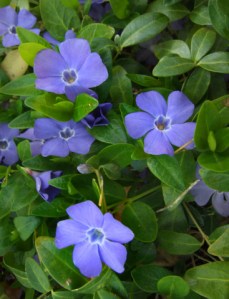
With violet-blue blossoms scattered like stars across a field of emerald green, Dwarf Periwinkle is a popular groundcover in the Pikes Peak region. Also available in white and purple-red, these 5-petaled pinwheel-shaped flowers bring welcome color to a shady spot. The shiny leaves are arranged along stems that may reach three feet in length, but the plants are only six inches high. (Another species, V. major, gets much larger.) The stems will root wherever they touch the ground.

(more…)