

We’re approaching mid-summer, the time that nestlings fledge, birders wilt, and ornithologists announce updates to lists of North American birds. As is common in these days of DNA analysis, most of the changes involve taxonomic reordering and changes in genus. That’s fascinating for those interested in taxonomy, but for most birders, it’s the lumps and splits that claim our attention. When species are lumped, we stand to lose a lifer. When subspecies are split into two or more full species, we can celebrate a longer list. There are three changes this year that will affect our North American life list totals.
 Every year, the American Ornithological Society (AOU) reviews a number of proposed changes to the classification of North American birds. This affects the definitive list on which we birders base our life lists. Species may be added or deleted. Sometimes, a species is divided into two or more new species, such as the split of the Western Scrub-Jay a few years ago. (I gained a new life species as a result, as I have seen and photographed both the California Scrub-Jay and Woodhouse’s Scrub-Jay.)
 One aspect of nature I appreciate is its constancy. No matter who gets elected, a rose is still a rose. Whether I’m happy or sad, a moose remains a moose. The world can fall apart, but a jay is still a jay. Or not.
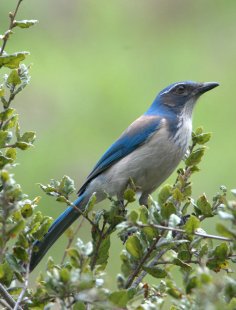 Heinlein said that there’s no such thing as a free lunch.* He must not have been a birder. When the American Ornithological Union met this year, many birders added a new species to their life lists without even leaving their arm chairs. It’s time to update our field guides—even the brand new Sibley’s. The Western Scrub-Jay has now been split into the California Scrub-Jay (Aphelocoma californica, left) and the Woodhouse’s Scrub-Jay (Aphelocoma woodhouseii).
 Mountain Plover