
 Have you ever watched a bird leave its perch? I mean, really looked? Lately I’ve been paying close attention to various species as they fall, tumble, leap, or launch themselves from the branch or fence post on which they’ve been standing. I’ve been amazed by the many different ways birds take to the air.
 Loons require a long runway, and it has to be water. If they get stranded on land, they’re stuck, unable to fly. Other waterfowl seem to do a lot of flapping before becoming airborne, but then they’re starting from ground (or water) level. I’m actually pretty impressed that ducks manage to gain altitude at all. From my perspective, they just don’t look like they’re engineered for flight.
 Chico Basin Ranch is a great place to bird all year round, but it is a must-see during spring migration. It’s easily worth the 45 minute drive from Colorado Springs, and the $15 daily access fee (annual passes are also available).
 A look at a map of Colorado shows why birds and birders love Chico Basin. Straddling the El Paso/Pueblo county line, the ranch attracts species found in the southeast corner of Colorado as well as those more that live in the north and west. Strategically situated between miles of arid, short-grass prairie on one side, and more miles of arid short-grass prairie on the other, the year-round ponds and green trees are a welcome rest stop for tired and thirsty migrating birds.
 I recently read a book that I just have to recommend.
 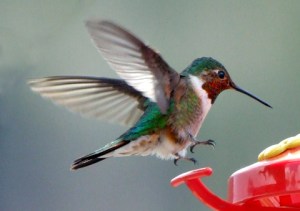 A brightly colored hummingbird zooms past on its way to a feeder. A finch fills the air with music. Birds provide us with hours of entertainment. How can you welcome more wild birds into your yard?
 Mountain Plover