
 With giant, trumpet-shaped flowers facing outward around a central stalk, a blooming amaryllis makes an eye-catching houseplant. Colors range from white through pink to red (and even almost black), as well as salmon-orange. Stripes or contracting edges are common. “African” amaryllis have more compact forms suited to indoor cultivation. Dwarf amaryllis are smaller in size but can produce more blooms.
Not surprisingly, these striking, easy-to-grow bulbs are popular holiday gifts; perhaps you received one this year. There’s even a bright red variety named “Merry Christmas”!

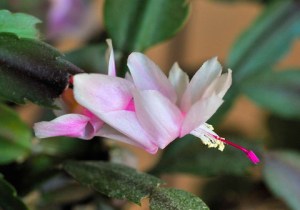 Small succulent-looking plants covered with huge, florescent red, pink or white flowers are featured prominently in many stores right now. Go ahead get one. You won’t regret it.
 Mountain Plover