
 Usually, Colorado’s seasons have little to do with the calendar. This may be the vernal equinox, but we still expect snow and it’s way too early to plant those tender flowers and veggies. After gardening in California for years, I’ve mostly adapted to the challenge here, but from March through mid-May I would drag around the house feeling frustrated that I couldn’t plant anything the least bit frost-tender.
Then I started birding—and to the birds, March means spring! As a birder, there’s plenty of activity to keep me glued to my binoculars.
 Even before I was a birder, I could identify the male Red-winged Blackbird. Found in shallow marshes and other wetlands around the country, the black bird with the red and yellow shoulders is a familiar sight. Even the little drainage pond at the end of our street, with its sparse patch of cattails, is home to a few of these noisy blackbirds.
 While we’re still shoveling snow and scraping windshields, bluebirds are thinking about spring. Colorado has three species of bluebirds, Eastern, Western (seen here) and Mountain, and all of them are what birders call “early nesters.”
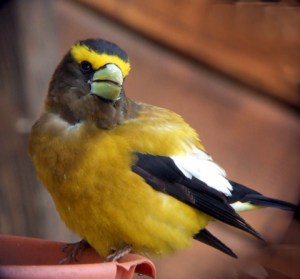 One familiar bird impacted by the fate of our forests is the Evening Grosbeak. Evening Grosbeaks are birds of boreal and montane forests and are therefore susceptible to all the incursions into those habitats. Chemical control of spruce budworm and other tree pests lowers this species’ food supply and may also cause secondary poisoning. Competition and the spread of disease among house finches, goldfinches, and other feeder birds may also be playing a role in the decline. Finally, populations are affected by fluctuations in insect populations and the frequency and intensity of forest fires.
 Mountain Plover