Mealybug Invasion

long-tailed-mealybug-c-david-cappaert-michigan-state-university-bugwoodorg-2With temperatures dipping into the low 20s and our first (finally!) snowfall, the bugs in our gardens are either dead or in hiding. But before we collapse into that comfy recliner with a garden book and a cup of tea, we need to take a good look at our houseplants. It might be winter outside, but indoors the bugs are having a field day.

At least they are at our house. I’m currently at war with some aggressive invaders. They’re about an eighth of an inch long, are covered with sticky, gooey, white fluff, and are wedged into the leaf axils of many of my favorite houseplants. Yup, my indoor garden has mealybugs. (more…)

Oh no… Spider Mites!

2-spotted-spider-mite-whitney_cranshaw-colorado-state-university-bugwoodorgMy houseplants had been looking fine all summer, but now they were obviously ailing. No leaves were drooping, no obvious critters were chomping on the leaves. It was more of a general sense of decline—and a dappled, grayish pallor to the foliage.

Closer inspection revealed that many of  the V-shaped joints between leaf petiole and stem were filled with minute webbing. My skin crawled. My plants were infested with spiders! To be more accurate, my plants had spider mites. These tiny bugs are not insects. They are arachnids, just like spiders, scorpions, and ticks. Like spiders, they have two body parts and eight legs. Unlike spiders, all of whom are predators, spider mites are more like vampires. They suck plant juices.

(more…)

Tropical Flowers in January?

lah_6081

What plant thrives indoors, shrugs off low humidity, and blooms all winter in bold shades of white to pink to red? Surprise! It’s wax begonias!

Also called fibrous begonias, these familiar bedding plants have large, round succulent leaves in either lime green or a beautiful burgundy- or bronze-red. Flowers have fleshy petals surrounding a bright yellow cluster of stamens. Plants grow to a height of about six to twelve inches. They tend to flop, creating a solid mass of color, and even trailing over walls and container edges.

(more…)

How to Grow a Houseplant: Water & Food

Note: This is Part 2 of a three-part series on How to Grow a Houseplant. Part 1 covered light & temperature requirements, Part 3 will discuss containers and repotting.

aloe-vera-bf-2008aug01-lah-057

Water
The biggest problem most people have with growing container plants is watering. Ideally, the potting soil for your plant should have equal amounts of air and water trapped between its particles. It should be moist but not soggy.

Most people realize that letting plants dry out is a bad idea (unless you’re growing cactus). However, too much water can also cause wilting. Frequently, a novice gardener will interpret the limp leaves to mean the plant is thirsty, and water more. This nearly always proves fatal. What has actually happened is that the roots have suffocated from a lack of air. Dead roots can’t absorb water, so the plant wilts. More houseplants die from overwatering than from drought. Always check the soil first.

You can stick your finger into the potting mix, or buy a simple water meter that indicates how wet your plant is. Or, if it isn’t too big and heavy, you can simply lift the pot. A well-watered pot is heavy. If your plant feels like a light-weight, it’s time to water.

(more…)

Christmas Cactus (Schlumbergera sp.)

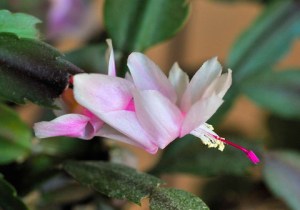
christmas-cactus_home_20091103_lah_5353x-1Small succulent-looking plants covered with huge, florescent  red, pink or white flowers are featured prominently in many stores right now. Go ahead get one. You won’t regret it.

Christmas (or Thanksgiving) cactus are both beautiful and easy to grow.

Yes, they’re cactus, but these plants are native to tropical rain forests in the mountains of Brazil, where they grow on tree branches as epiphytes. That should tell you that they like to be kept somewhat moist, but never soggy. This is particularly important while the plants are in bloom. In fact, uneven watering is a main cause of blossom drop. (Another is an abrupt decrease in humidity, such as comes when you move a plant from the greenhouse to your home.) The rest of the year, they are a bit more forgiving, and will tolerate a bit of drying out. It’s always best to let the top inch of soil dry out between waterings.

(more…)

How to Grow a Houseplant: Light & Temperature

spider-plant_home_20090908_lah_0280“Mom, can you fix it?”

My college freshman was looking at me with a dejected, mournful expression, holding the spider plant I had sent to school with her. It looked awful. Wilted, brown leaves hung limply over the edge of the plastic pot. There were no signs of life.

“Well, that one looks kind of done, but I can give you another one. I’ve got plenty of spider plants. What happened?”

The story unfolded… it was well below freezing outside, but the central heating in the dorms was turned way up. Suffocating in her room, she’d opened the window a crack. No one thought to move the plant on the windowsill. Unfortunately, tropical spider plants aren’t equipped to survive 6ºF drafts. The poor plant had succumbed during the night.

As I potted up another victim, er, spider plant, I explained to my daughter that the primary thing to remember is that plants are alive. I know this seems obvious, but too many people treat them as decorations rather than living organisms. It’s better to think of them as pets—sort of like green hamsters without the exercise wheel. They need food and water, shelter and room to grow. If you meet their needs, they’ll not only survive, they’ll grow and perhaps even bloom. It’s really not that hard.

(more…)

Easter Lilies: Now What?

If you received a lily for Easter this year, you might be wondering what to do with it once it stops blooming. In warmer parts of the country, you can plant the finished bulb outside. Without being forced to bloom for Easter, the white flowers will appear in July. You’ll be enjoying your “Easter” Lily for many years to come.

Unfortunately, in most of Colorado, winters are too severe for these lilies. Unlike other varieties, trumpet lilies are only hardy to USDA zone 6. So, unless you have a very protected spot in your garden, you’ll have to buy a different kind of lily for outdoor growing.

To get the most from your gift plant, keep your lily in a cool, bright spot, but not in direct sunlight. Remember to water enough to keep the soil constantly damp, but not soggy. Removing any foil wrapping from around the pot will help excess water drain away from the roots.