
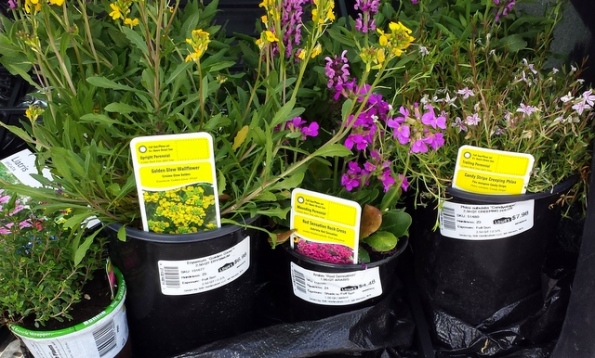
Spring has finally arrived here at 7,100 feet, and I’ve been feverishly planting—move the mulch, dig a hole, dump the perennial out of its pot and stick it into the ground. Fill in any gaps with leftover dirt, replace the mulch. Rinse, repeat.
As I work around the lawn, adding flowers everywhere I can, I’ve noticed how abysmal my dirt is. Since we added compost, I assume that eventually it will qualify as soil, but right now I’m dealing with lumps of bentonite clay embedded in a deep layer of gritty, coarse sand. The clay was supposed to be seven feet down, but in the process of digging a basement, it got mixed with the surface layers.
 The summer is heading for fall, and it’s time to fertilize lawns. Go to any garden center and you’ll see piles of name brand lawn fertilizer, complete with directions on the back. Just follow these simple steps and you’ll have a healthy, green, weed-free lawn.
 It’s spring. I’ve been digging in the garden—at least between snow storms. My back muscles (and knees and shoulders) ache, there’s dirt under my broken fingernails, and a huge smile on my face. In fact, there’s dirt in my teeth—I’ve been pulling weeds and shaking the soil off their roots before piling them into the compost bucket, and I keep forgetting to close my lips.
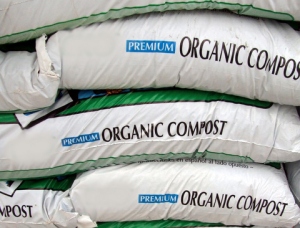 You’re gotten your test results back from the soil lab, telling you to add some organic matter. What’s the best thing to add?
 Mountain Plover