
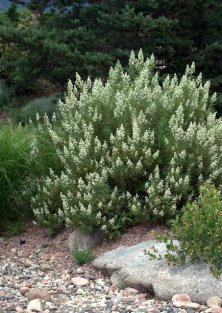
 From a distance, a blooming fernbush (Chamaebatiaria millefolium) resembles a lovely white lilac bush, but no lilac would be in bloom at this time of year. Growing to seven feet high and wide, these shapely shrubs are covered in upright sprays of showy white flowers from June through August. Individual blossoms are reminiscent of single roses, and attract bees and butterflies. Come autumn, the flowers are replaced by russet seed heads.
A closer inspection reveals reddish peeling bark and the aromatic, finely dissected leaves that give Fernbush its common name. Even in our cold climate, these leaves stay on the bush for most of the year; branches are bare for a mere three to four months each winter. Fall foliage is an attractive copper color.
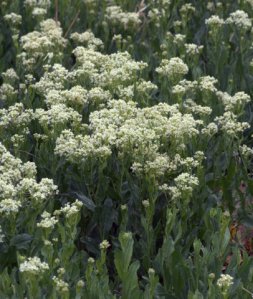 Spring flowers are finally filling the fields. Milk vetch, penstemons, wild onions and marsh marigolds all caught my eye as I hiked though the towering cottonwoods along Fountain Creek, at the base of the Rockies here in central Colorado. I was particularly impressed by huge swaths of a foamy white flower I didn’t immediately recognize.
 It was like a bird-shaped ghost—we couldn’t quite believe our eyes. My friend Debbie and I were birding near Grand Junction, in Colorado National Monument—a spectacular place of sheer cliffs, rock pinnacles, and copper-colored sandstone.
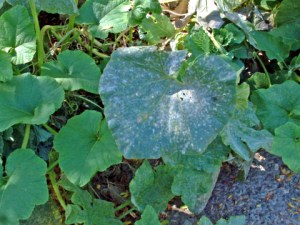 The huge zucchini leaf looked as if it had been dusted with flour. The man holding it was looking at me expectantly, waiting for my diagnosis. I was volunteering at our county’s Master Gardener helpdesk, providing free gardening advice to the general public. Sometimes we get stumped, but this time I immediately knew exactly what the problem was.
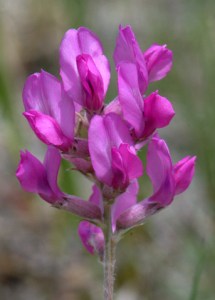 I was hiking on a nearby ranch last week when we came across some spectacular wildflowers. As I knelt to grab some photos, my plant expert companion remarked, “You know that’s locoweed. We should pull it out!”
 While most fall and winter berries are red, or perhaps dark blue, snowberries sport showy clusters of pristine white, berry-like fruit. If not eaten by the birds, the fruit will adorn the bare branches in winter. The upright, finely-branched shrubs are about three feet tall. Moderate growers, they are long-lived, with tiny pink, bell-shaped flowers that appear in early summer.


 Mountain Plover