Can you identify this bird? The photo was taken in Arizona during the month of May. The answer will appear next week.


Can you identify this bird? The photo was taken in Arizona during the month of May. The answer will appear next week.
 My pole beans, which got a rather late start, are finally climbing their way up the strings on my bean tower. I’m always impressed that the plants know just what to do. Those reaching tendrils that come into contact with the string immediate start to coil around it, securing themselves to the support. A few plants were still free, waving in the light breeze. I tucked them between the two strands of twine, so they too could wind their way upward.
A few rows over, my pea vines have their tendrils securely wrapped around the netting I put up for them. We all know that pole beans climb and pea tendrils wrap, but I wondered how they knew to do so. After all, most plants don’t have this ability.
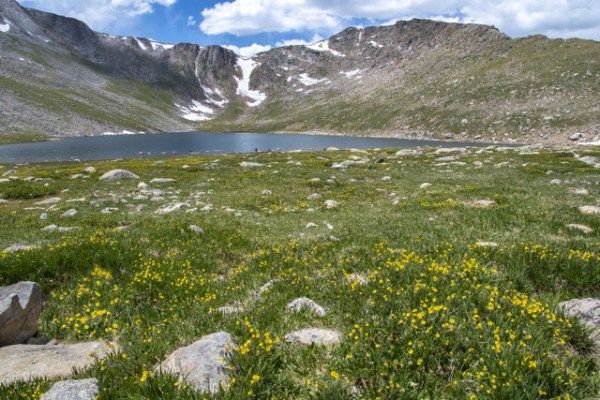
A friend and I (along with several hundred others) were enjoying the ambience at Summit Lake, most of the way up 14,265 foot high Mount Evans. We were taking a break from the hairpin turns and sheer drop-offs on our way to the top of the highest paved road in the U.S.A.
Situated at 12,836 feet, Summit Lake is a beautiful place. The water shimmered in the bright sunlight. Alpine wildflowers carpeted the rocky ground, backed by craggy cliffs that barely hid the actual summit. As usual, the parking lot was overflowing, people were queued up to use the restrooms, and there was a total disregard for the signs begging everyone to keep to the trails and stay off the fragile tundra.


Last month I wrote about keeping your photo simple—isolating the subject and avoiding distractions. But there’s much more to composition, many more ways to make your photos terrific. Here are a few tips and suggestions you may find helpful. (more…)
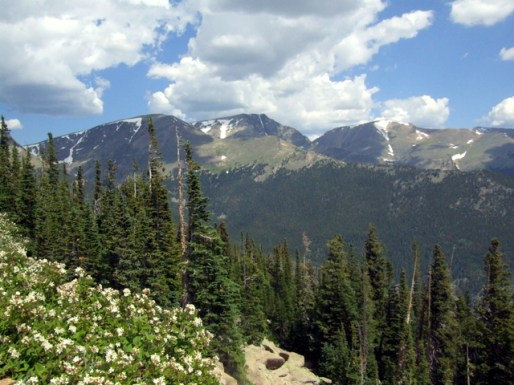
We were gone this weekend for our 39th anniversary, so I didn’t get a chance to write a new post about birds and birding, my normal Monday topic. Instead, I want to share some photos from our trip.
We stayed in Kremmling, a very small town nestled between Steamboat Springs to the west and the continental divide to the east. After packing up on Sunday morning, we decided to head home to Colorado Springs via one of our favorite national parks, Rocky Mountain.
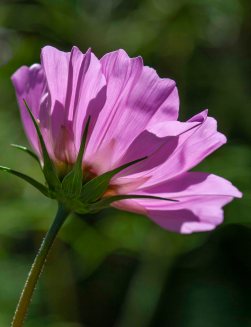 Do you enjoy big flowers with bright, showy colors and carefree maintenance? It’s hard to beat annuals for season-long impact. Whenever I think of annuals, I immediately think of cosmos, one of the very best annuals for Colorado gardens.
There are currently thought to be 36 species in the genus Cosmos, but the two most often grown in our gardens are C. bipinnatus (left) and C. sulphureus. (There are two other Cosmos species in cultivation. One is a frost-tender, tuberous perennial known as Chocolate Cosmos, C. atrosanguineus. The other is Cosmos parviflorus, a wildflower of the western United States.)
 While Black-capped Chickadees are familiar birds over the northern half of North America, Mountain Chickadees are a western specialty. True to their name, they care found at higher elevations from the Rockies westward to the Sierras and Cascades, and as far north as the Yukon.
Mountain Chickadees are also selective about their habitat, preferring to hang out in conifer forests. This is why we enjoyed them at our last house, where we were surrounded by ponderosa pines. Our current home is in a new neighborhood lacking mature trees. Hoping our old friends would still come and visit, we included two fairly large Austrian pines and a dwarfed cultivar of a limber pine, (Pinus flexilis ‘Vanderwolf’s Pyramid’) in our new landscape. It took three years, but the birds are finally here.

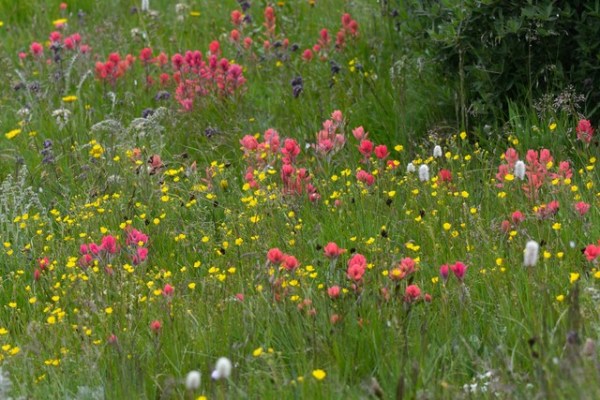
Nature is an excellent gardener. Take a walk through any pristine boonies and you’ll be amazed at the beauty of what grows untended. I’d never consider combining flowers in shades of fuchsia, orange, yellow, and blue, but when nature does it, we stand in awe. Ferns tucked alongside waterfalls, acres of wildflowers, pink Oxalis carpeting the ground under towering redwoods—it’s all stunning.


 One aspect of nature I appreciate is its constancy. No matter who gets elected, a rose is still a rose. Whether I’m happy or sad, a moose remains a moose. The world can fall apart, but a jay is still a jay. Or not.
That’s right. This year, the American Ornithological Society (AOS, formerly the AOU) has voted to rename the Gray Jay. From now on (or should I say “once again”?), this personable gray-and-white bird will be known as a Canada Jay.
If you were stymied on Monday, now can you name this bird? The photo was taken in Colorado in July. The answer will appear at the end of next Monday’s post.

 Mountain Plover