
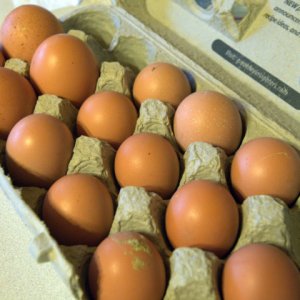
 After a fox attack last spring, we’re down to only three aging hens and six five-month-old pullets. Instead of giving eggs to all our friends, I’ve had to buy them at the market. So this morning, after being out of town for the weekend, I walked out to the coop hoping to find an egg, or maybe two. Instead, there were close to a dozen!
Yup. A month ahead of schedule, our new pullets have become egg laying hens.
 It’s time to clean out the chicken coop. All summer my little flock has been happily picking weed and grass seeds out of the straw I spread in their coop last spring. At the same time, they’ve broken down the big pieces of grass stem into finer shreds. And, best of all, they’re balanced all that carbon with some nice, hot chicken manure.
 Yesterday morning, I went out to tend my flock, and realized that my new pullets, hatched around June 1, were nearly the same size as my mature hens. When they were mere children, they fit just fine in their twelve square foot cage (above). (For their safety, it’s important to separate young birds from the main flock.) Now, however, it was clear that they needed more room. Although I had planned to wait until next month, I decided this was the time to release them into the main coop.
 Chickens can be pretty darn mean. The terms “pecking order” and “henpecked” have a firm basis in how a chicken society operates. Like many other animals—wolves and elephants come immediately to mind—there is an alpha chicken (left) who literally rules the roost. Every other bird knows its place too, which (most of the time) results in peaceful coexistence.
 Since my flock lacks a rooster, we have a queen hen. The other hens kowtow to her. She is always first to grab the scraps I toss into their coop, and the first to sample the fresh water when I clean their basin. And then there is the poor biddy in last place (right). She’s lacking feathers in a number of spots, not because she’s molting, but because the other hens pull them out.
 It’s spring. Bulbs are blooming, birds are singing, and feed stores have fluffy yellow baby chicks!
 Last week I wrote about the design and layout of chicken coops. Today we’ll talk about the inside.
 The biggest investment in keeping chickens is their housing. Chickens are remarkably hardy birds, but they need some sort of shelter to make it though a Colorado winter. They also need protection from raccoons, possums, foxes, owls, coyotes, hawks, weasels, and neighborhood dogs.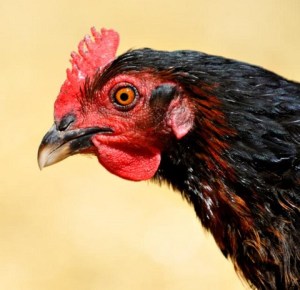
 Mountain Plover