(Make sure you also see the previous months’ Bird Quizzes!)
Can you identify this bird? (Don’t you just love LBJs?) The photo was taken in October in Colorado. My answer will appear next Monday.


(Make sure you also see the previous months’ Bird Quizzes!)
Can you identify this bird? (Don’t you just love LBJs?) The photo was taken in October in Colorado. My answer will appear next Monday.
(Be sure to see Part 1, posted last week.)
 I was still smiling happily at the thought of having finally seen a Flammulated Owl—a new life bird for several of us that evening. Because the females spend every hour of daylight inside the nest with their young, you can only see them at night—flying around catching moths in the dark. Meanwhile, the males spend their days in a tall pine growing on top of a (usually inaccessible) ridge, roosting right up against the trunk on a high branch. As they sit motionless for hour after hour, they are nearly impossible to spot; their feathers are a perfect match for the reddish-brown Ponderosa bark.
If Brian hadn’t graciously allowed us to accompany him, it’s unlikely I ever would have checked this species off my life list.
 I’ve mentioned in the past how bad I am at spotting owls. (That might have something to do with my typical 8:30 pm bedtime.) Well, a couple of weeks ago a birding friend called, asking if I wanted to join her and some others for an evening with Colorado College researcher Brian Linkhart, who has been studying Flammulated Owls for the past 30 years. We’d be traipsing through the Manitou Experimental Forest (west of Colorado Springs) in the dark, accompanying Brian and his student researchers as they netted and banded the tiny owls.
Of course I said yes!
To refresh your memory, here again are the photos for Bird Quiz #6. Read no further if you still want to have a shot at identifying these birds.

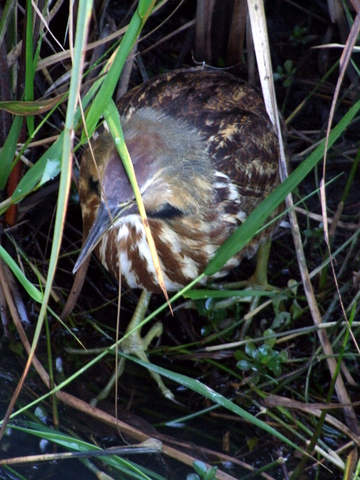
(Make sure you also see the previous months’ Bird Quizzes!)
Can you identify these birds? The top photo was taken in Arizona in May. The bottom photo was taken in Florida in December. My answer will appear next Monday.


 My granddaughter, Willow, is only a month old, so it’s a bit too soon to be buying her binos and a field guide. Still, I’m looking forward to our first adventures outside, watching her joy as she discovers grass and flowers and ladybugs and, yes, birds. I hope she’ll be as fascinated with God’s creation as I am.
Since I hope to create a budding birder, I want to make sure I go about this in the right way. You can’t force a kid to love nature. So I’m already reading articles and talking to birding parents and grandparents about what works and what I should avoid.
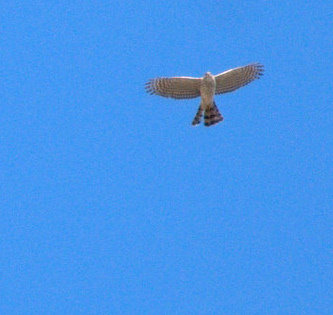
To refresh your memory, here again are the photos for Bird Quiz #5. Read no further if you still want to have a shot at identifying these birds.

(more…)
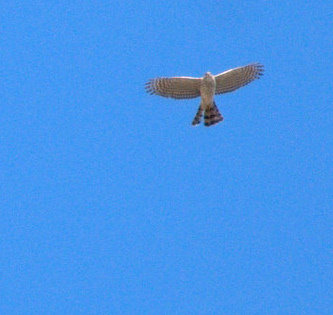
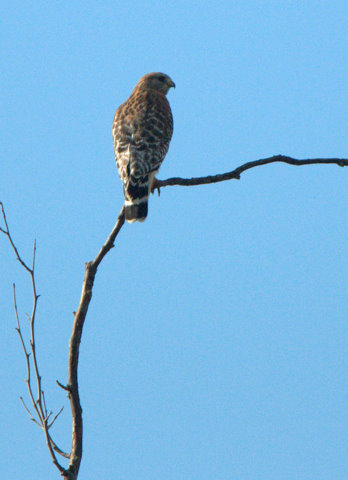
(Make sure you also see the previous months’ Bird Quizzes!)
Can you identify these birds? The first photo was taken in Colorado in May. The second photo was taken in California in March. My answer will appear next Monday.
 “I’m interested in learning how to watch birds. How can I get started?”
The question was music to my ears. Who doesn’t love to share their passion with someone else? It wasn’t so long ago that I was a new birder, trying to juggle a crummy pair of old binoculars with a mysterious field guide, all while trying (unsuccessfully) to keep an eye on the bird I was trying to identify. I’ve come a ways since those early days and even though I still have much to learn, I’m eager to pass on my limited birding skills.
 It was like a bird-shaped ghost—we couldn’t quite believe our eyes. My friend Debbie and I were birding near Grand Junction, in Colorado National Monument—a spectacular place of sheer cliffs, rock pinnacles, and copper-colored sandstone.
We had stopped for lunch, and were alternately taking bites of our sandwiches and grabbing our binoculars. Blue-Gray Gnatcatchers, Rock Wrens, and Gray Vireos abounded. I was surprised to see Gambel’s Quail running under the junipers; I thought of them as living a bit more to the south. I was told that the species had been introduced to Western Colorado as a game bird.

