Wings

One of the delights of living near the US Air Force Academy is watching the various ways the cadets get into the air. There are the small training planes, the gliders, and the air mattress-like parachutes. Every so often, most often during football season and at graduation, we’re treated to an old bomber or two. And then there are the incredible Thunderbirds, whose aerial display comes right over our house. What a view!

Of course, you can immediately tell when the Thunderbirds are in town—you can hear their screaming engines echoing off the Front Range mountainsides. (If you want to actually see the jet, look far ahead of the point  where the sound seems to be originating.) But let’s eliminate the sound for a moment. How can you identify a single-engine prop plane from a glider from a parachute from a jet? Easy—look at the shape of the wing.

(more…)

It’s a Bird, It’s a Plane…

Red-tailed Hawk_ElPasoCo_LAH_9836r

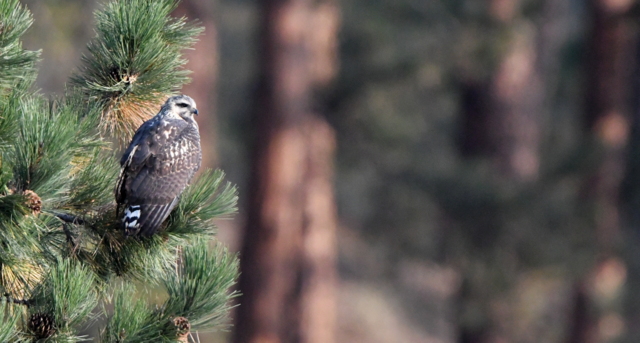
I thumbed through the field guide. Let’s see… a Red-tailed Hawk is 19 inches, head to tail, with a wingspan of 49 inches. A Rough-legged Hawk is a couple of inches longer, 21 inches tall with a 53 inch wingspan. And a Ferruginous Hawk is larger still, 23 inches tall and 56 inches across.  Or, it could be a Northern Harrier, checking in at 18 inches by 43 inches. So which hawk was it sitting on that pole, silhouetted against the sky? I was glad that there were only a few real options in eastern Colorado at this time of year.  I flipped the page to a Golden Eagle, 30 inches in height, wingspan of 79 inches. No, surely I’d be able to tell if the bird was that large! It had to be a hawk.

(more…)

Colorful Birds: Part 1

What’s the first thing you see when you look at these birds? For me, it’s their incredible diversity of color! And it’s not only tropical birds—even cold climates produce blue Steller’s Jays, red House Finches, yellow goldfinches, and pink rosy-finches. Or consider the ruby gorget on a Broad-tailed Hummingbird, flashing its iridescent hue when the sunlight hits it just right. How can feathers be all these colors? It varies.

(more…)

Beaks

Rhinoceros Hornbill @DenverZoo 20090527 LAH 238r

We have hands. Birds have beaks. Have you ever noticed how useful a beak is? While lacking our manual dexterity, birds have no problem securing their dinners and stuffing said meal down the gullets of their young. Beaks are used to manipulate objects and preen ragged feathers. Some birds use their beaks to impress potential mates, or to scare away intruders. Beaks can even be used as weapons. Have you ever tried to steal an egg from under an irritated hen?

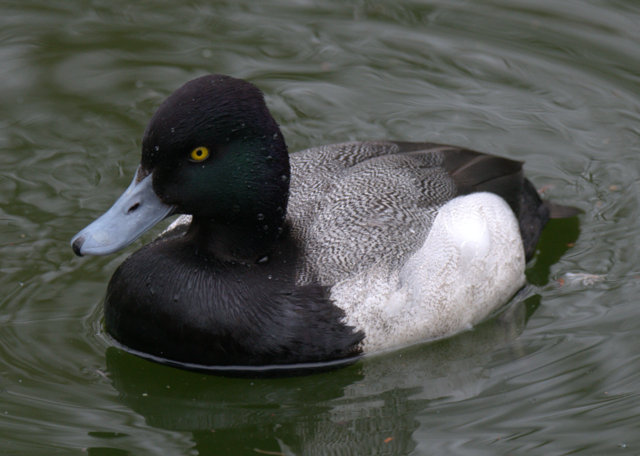
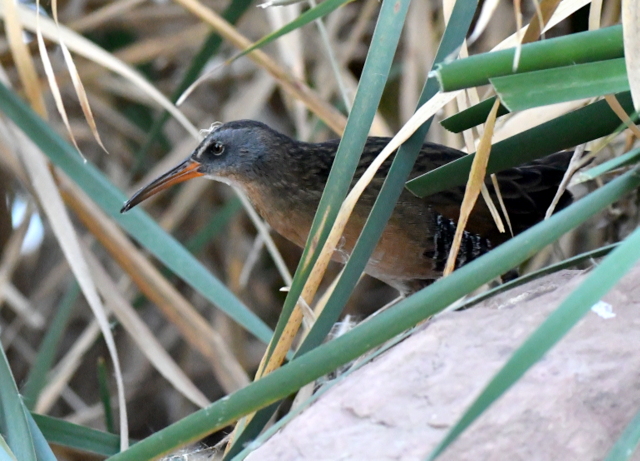
Beaks are also useful to birders, as their size, shape, and color are all helpful when it comes to identifying bird species. In fact, the more attention I pay to birds’ beaks, the better birder I become.

(more…)