
It was another hot day. Usually by now, the weather has moderated, but we’ve been in the middle of an unseasonable heat wave and I was completely wilted. I was yearning to go birding—my new job had kept me indoors far too much lately—but the only time available was from mid-morning through early afternoon—the hottest time of the day. As much as I wanted to get outside, I had to ask myself, why bother?
Often, I think the birds are smarter than the birders. When the heat gets oppressive, they don’t stand out in the sun with binoculars. No, they adapt. Most migrating birds fly at night, feed in the early morning hours and just before dark, and rest during the heat of the day. Birders know this, which is why most field trips start early. But sometimes, our schedule just doesn’t allow us to do what we know is optimal. We have to take what we can get and make the best of it.
Still, I thought, maybe I could emulate the birds, and manage to both enjoy nature and stay cool at the same time.
(more…)


 How’d you like to be able to see with your eyes closed? Wouldn’t it be handy? You wouldn’t get grit in your eyes during a dust storm. Your eyes would never turn red from swimming in a pool with too much chlorine. And you’d never get poked in the eye. If only we could see through our eyelids!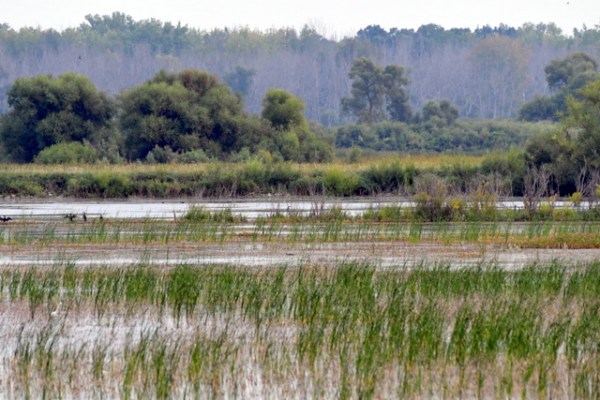
 How would you like to be stalked, captured, then shaken so hard that your neck breaks—and then impaled onto a spike and left to age like a side of beef before finally being torn apart and eaten? That sounds like material suitable for a Halloween thriller. Yet, that’s your likely fate if you’re a mouse or lizard unlucky enough to catch the eye of a shrike. Shrikes are ferocious predators. It’s a good thing for us that they’re only about as big as an American Robin.
 I was excited to finally be going to Michigan, my 48th state. While the trip wasn’t exclusively a birding trip—we also had people to see—it was new territory for me. I was sure to get at least one lifer, and hopefully many more. On the other hand, my expectations had been tempered by the less-than-spectacular
