
 The neighborhood where I live seems to be a magnet for door-to-door salespeople selling services. One company in particular has been particularly persistent in their marketing attempts—an exterminator.
The first time they rang the doorbell, I politely but firmly told the guy I did not want my yard sprayed. I consider a diverse arthropod population to be a sign of a healthy landscape. I particularly want insects around to feed the birds I feed. Moreover, I had just planted a pollinator garden, designed to attract bees, butterflies, moths, and other fascinating creatures;. The last thing I wanted was to kill my invited guests.

 Someone left the screen door open, and suddenly our house is full of annoying, buzzing, flies. They circle the kitchen while I’m cooking, tangle with my hair while I’m sitting at my computer, and zoom past my Kindle when I’m reading in the evening. I have to ask, did we really have to have flies, God?
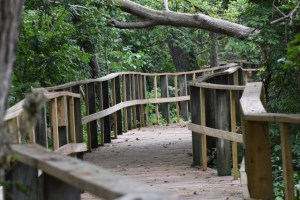 Sometimes you take a birding trip and it’s everything you ever dreamed about. Our time in Australia two years ago was like that. And sometimes, you try your hardest and things just don’t work out the way you anticipate, such as the trip we took exactly one year ago. Pete had arranged a series of work-related meetings in Michigan and Ontario, and I had never been there, so we decided to make a vacation out of it and drive around the Great Lakes. In the process, I visited my last four states, culminating in North Dakota as number 50.
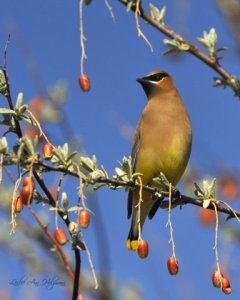 I was wandering through the forest in western Washington when I heard a series of high-pitched, whistling bird calls. As I peered into the foliage, I finally made out the Cedar Waxwings that were making the sound. Another time, I was in southern Texas, along the Rio Grande border. Again, I heard birds singling some very high notes. In this case, they were followed by a series of lower notes and a distinctive two-tone call. I realized that I was surrounded by a number of Ruby-crowned Kinglets.
 Colorado Springs gets a lot of hail. Anyone who has lived here very long knows that hail is part of life. But in the 25 years we’ve called Colorado home, we’ve never seen a summer like this one. Three times in the past three months, the south end of town has been pummeled by huge hailstones— softball-sized cannonballs from the clouds that demolished anything in their path. Gardens, cars, roofs, windows—the damage is devastating.

 While Black-capped Chickadees are familiar birds over the northern half of North America, Mountain Chickadees are a western specialty. True to their name, they care found at higher elevations from the Rockies westward to the Sierras and Cascades, and as far north as the Yukon.

