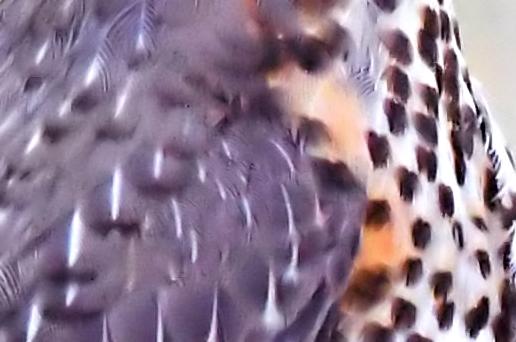
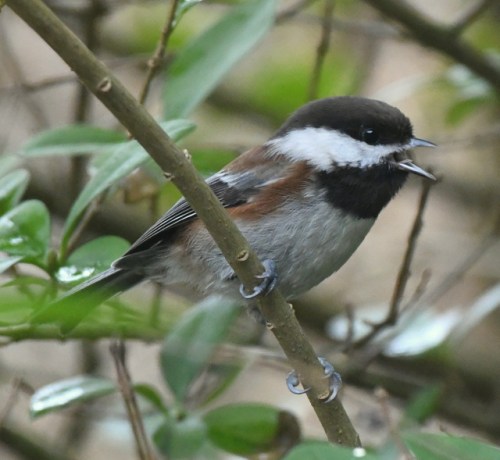
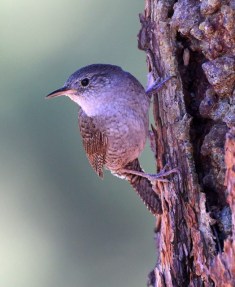
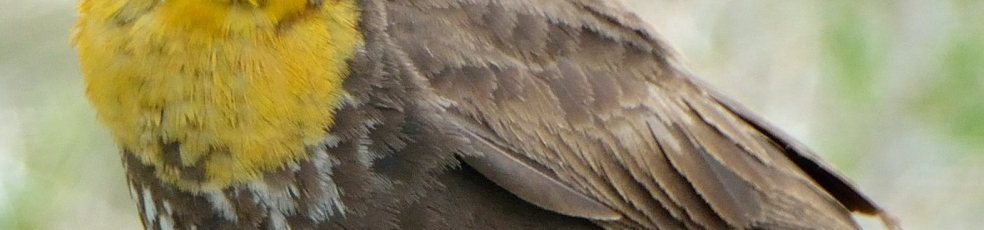
If you were stymied on Monday, now can you name this bird? The photo was taken in Utah in April. The answer will appear at the end of next Monday’s post.

If you were stymied on Monday, now can you name this bird? The photo was taken in Utah in April. The answer will appear at the end of next Monday’s post.

Can you name this bird? The photo was taken in Utah in April. I will post the uncropped photo Saturday, giving you one more chance to identify this bird. The answer will appear at the end of next Monday’s post.

(This post continues my series on birding in Australia; choose “Birding Trips” in the Category box at right to see my previous posts.)
The strip of coastline between Sydney and Brisbane is full of national parks. With some notable exceptions, Australian national parks are not as developed as the ones in the U.S., and could better be compared to our national forests. While Australia is similar in size to the United States, much of it is desert. There is a lot of pressure to develop the arable land along the coast, and the national parks play an essential role in preserving the natural environment. They also provide plenty of opportunities to pull off the road and look for birds. Using a combination of Australian birding sites and eBird lists, we picked a fairly random assortment of likely looking destinations and headed in their direction. (more…)
Last Saturday, I participated in a tiger hunt. These tigers are fearsome predators, pursuing their hapless victims with incredible speed, and I was armed not with a gun, but with my camera. Happily, however, the only danger I was in was that of sunburn. The tigers we were hunting were the five local members of the large tiger beetle family, Cicindelinae.
How can I get birds to come to my yard? I hear that question a lot, as I’m working part time at a store that sells feeders, nest boxes, bird seed, etc. People come in and want to buy a feeder, but they’re not sure the birds will notice. What kind of feeder should they get? What should they put in it? Is that even the right place to begin?
Of course, my job is to promote sales, so I dutifully point out all the appropriate products. (I also dole out a lot of free advice.) But what would I say if I met you somewhere else, where I don’t work? I would tell you that there are three “first steps” to attracting birds to your yard. Here’s where you should start.
If you were stymied on Monday, now can you name this bird? The photo was taken in Colorado in August. The answer will appear at the end of next Monday’s post.

Can you name this bird? The photo was taken in Colorado in August. I will post the uncropped photo Saturday, giving you one more chance to identify this bird. The answer will appear at the end of next Monday’s post.

(This post continues my series on birding in Australia… choose “Birding Trips” in the Category box at right to see my previous posts.)
I woke the next morning as soon as it was light and headed out the door, surprising several grazing kangaroos. I snapped their picture as they bounded away. Several Noisy Miners lived up to their name, making a racket in the early morning stillness. A pair of raptors landed on the top of a tall tree nearby. Pulling out my binos for a good look, I realized they were Ospreys—familiar birds. It seemed strange to see them so far from home.

When it comes to wildlife, how close is too close?
We’ve all heard about the clueless tourists who want to snap a selfie with the bear or moose. All too often, someone ends up getting hurt. But you and I are sensible people who do not want to be spitted by a bull elk, or gored by a buffalo. So, how close should we approach these potentially dangerous animals?
I’m gazing out my frosted window at the birds in our backyard. In the four hours since sunrise, the thermometer has only climbed from 13 to 15 degrees. Tiny snowflakes waft down onto the deck and bird feeders. The predawn fog has frozen onto every twig and blade of grass, turning the landscape into a fairyland of hoar frost.
The birds—House Finches, Dark-eyed Juncos, a few pigeon—are devouring my black-oil sunflower seeds as fast as their little beaks can crack the shells. A flicker has staked out the suet feeder. (I miss the nuthatches and chickadees from our old house, surrounded by pines.) But as popular as the feeders are, the birds are also flocking to my heated birdbath.