
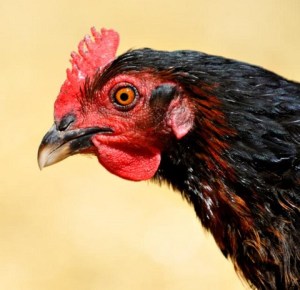
My therapist lives in a chicken coop. Yup. We have (currently) six hens. Whenever I need some reassurance, I head out to the shed where they live. I tell them all my problems. In fact, I can tell them anything; hens are experts at keeping secrets. When I’m finished complaining, they come around and bwaaaaak and braaap at me. Hens must make the most comforting noises in the animal kingdom! My hens always help me feel better, and they don’t charge $100 an hour.
 How would you like to have a flock of robins outside your window? How about other thrushes, waxwings, sparrows, towhees, or vireos? Want to add Western Tanager to your yard list?
 I’ve learned the lesson once again. If you stay home, you won’t get any photos. If you go out, you may still come up empty handed—or you just might be surprised.
 From the big questions (how many species of birds are there?) to specifics (should the Bullock’s Oriole and the Baltimore Oriole be merged into one species called the Northern Oriole?), birders have long endured a bit of confusion. It seems even the most eminent ornithologists disagree on these and similar conundrums.
 If you are a serious birder, you probably keep a life list. As any collector understands, adding birds to that list brings a sense of elation, accomplishment and satisfaction. However, if you’ve been birding the same place for very many years, you probably have already seen most of the birds in your area.
 It was a brisk fall day. A friend and I were hidden among the cattails, binoculars in hand, field guide open between us. We were both new at birding. The wide assortment of ducks bobbing out on the reservoir, nondescript in their eclipse plumage, was giving us fits. That’s why we had come–to learn how to identify fall ducks.
 Even before I was a birder, I could identify the male Red-winged Blackbird. Found in shallow marshes and other wetlands around the country, the black bird with the red and yellow shoulders is a familiar sight. Even the little drainage pond at the end of our street, with its sparse patch of cattails, is home to a few of these noisy blackbirds.
  As we gather to give gifts to one another, it’s only natural for birders to offer special treats for the birds. There are lots of options.
 More expensive, but especially attractive to Pine Siskins, is Nyjer seed. These tiny black seeds (also called thistle) are imported from Africa. You’ll need a special feeder with smaller holes, or a fabric “sock” sold for the purpose. One advantage is that the seed is treated to prevent sprouting—you’ll have no Nyjer weeds to pull in the spring.
