As you read this, my husband and I are on our way to the land of wallabies (right), waratahs, and wattles. Yup, we’re going to Australia! This amazing country has been on my “bucket list” since I was thirteen, and we’ve been saving for it forever. I might be just a teeny bit excited.
 While my husband wants nothing more complicated than a well-deserved hammock on the beach, I want to see the continent’s unique birds and plants. That means spending a lot of time outdoors, and that means that, besides the kookaburras (left) and kangaroos, there are a number of less-than-friendly creatures I might encounter.
 They can swim both forward and backward.
 With the high plains sizzling in 90+ degree heat, I was desperate to escape to somewhere cooler. Plus, I really wanted to see some birds. That’s why I headed to the hills—or, more accurately, mountains. There’s an advantage to living right next to the Rockies. In less than an hour, I was at 7,700 feet, surrounded by ponderosas, birding at Manitou Lake. A day-use area popular with the fishing crowd, this five acre lake is also a birding hotspot. You have to get there early, especially on weekends, but the abundance of wildlife is worth the extra effort.


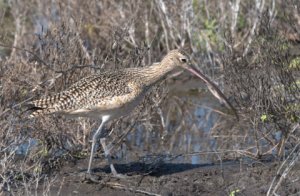 Cryptic coloration—the ability of an animal to blend in with its surroundings—has always fascinated me. Cryptic coloration is the reason there are so many brown, striped sparrows. It’s why female ducks and other species lack the bright plumage of their mates. It’s why birds show regional differences. And it’s why I almost missed seeing the Long-billed Curlew shown here.