
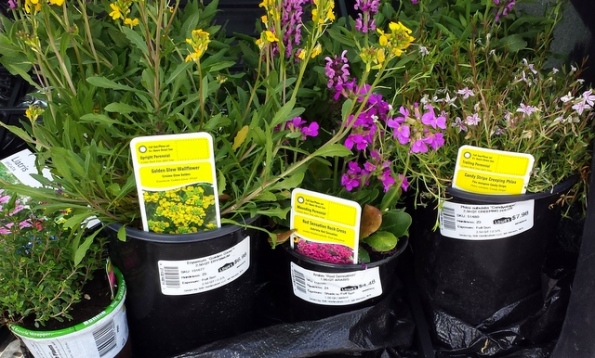
Spring has finally arrived here at 7,100 feet, and I’ve been feverishly planting—move the mulch, dig a hole, dump the perennial out of its pot and stick it into the ground. Fill in any gaps with leftover dirt, replace the mulch. Rinse, repeat.
As I work around the lawn, adding flowers everywhere I can, I’ve noticed how abysmal my dirt is. Since we added compost, I assume that eventually it will qualify as soil, but right now I’m dealing with lumps of bentonite clay embedded in a deep layer of gritty, coarse sand. The clay was supposed to be seven feet down, but in the process of digging a basement, it got mixed with the surface layers.
 Last month we learned that the so-called mosquito repellent plants don’t actually keep our yards pest free. Does that mean we have to suffer annoying, itchy welts? Thankfully, there are alternatives. We start by preventing mosquitoes from breeding.
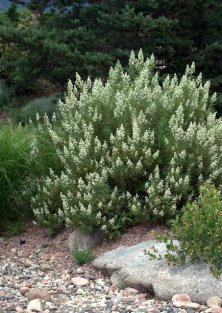 From a distance, a blooming fernbush (Chamaebatiaria millefolium) resembles a lovely white lilac bush, but no lilac would be in bloom at this time of year. Growing to seven feet high and wide, these shapely shrubs are covered in upright sprays of showy white flowers from June through August. Individual blossoms are reminiscent of single roses, and attract bees and butterflies. Come autumn, the flowers are replaced by russet seed heads.
 Most landscapes look terrific in May and June. The leaves are fresh and new. From pink crabapples to purple lilacs, it seems as if everything is in bloom. The contrast with the lifeless browns and grays of winter is enough to send you cavorting across the glowing, emerald green lawn.
 Do carrots really love tomatoes? Do beans and onions hate one another? The internet (and my bookshelf) is full of anecdotal advice about which crops we should plant together, and which ones we should not.
 How do you plant a new tree? Most people know to dig a hole “twice as wide and deep as the root ball” (according to the label I found hanging from the branches), then stick in the tree, making sure the roots are well buried. Amend the backfill with plenty of compost, pile it over the roots and tamp it down firmly. Finally, securely stake the thin trunk so it won’t wiggle in the wind. Right?
 I sometimes wonder why God made mosquitoes. They’re so… annoying! No one enjoys getting bitten. It’s more than just the never-ending itch—they carry some very nasty diseases such as malaria, yellow fever, and
 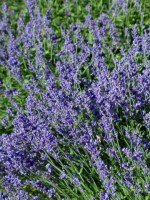 My Facebook feed is suddenly overflowing with lists of plants that supposedly repel mosquitoes. Just plant these flowers and herbs and your yard will be pest-free! Or, as one post on Pintrest claimed, “Plant a Mosquito Control container so you can sit and unwind in the evenings.” Unfortunately, anything that simple raises a red flag for me. Can controlling mosquitoes really be as easy as planting marigolds and lavender? It took some research to get past the hype, but I eventually found some scientific studies that look at this question.
 As a gardener, I’ve often dreamed of living someplace where plants actually want to grow. Colorado is definitely not that place. The weather is wacky, we’re short on water, and the
 Mountain Plover