The Garden and the Fire

Photo by by sierachris

I had planned to write an interesting and informative post about woodpeckers for today, but life was interrupted this past week. I’m sure you’ve heard about the massive fire in Black Forest, Colorado. Well, guess where we live… yup, Black Forest, Colorado. We were evacuated within hours of the fire’s start, and have been unable to get back into our house until now. We are grateful that we still have a house to get back into!

You can read more about our personal experience on my other blog, www.compost-blog.com. Today I’d like to share about what I am calling the miracle garden.
(more…)

The Other Geraniums

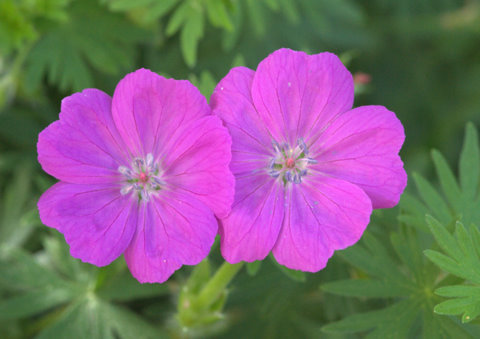
Geranium_XG-CoSpgsCO_LAH_9512We’re all familiar with the iconic red geranium in a window box or flowerpot. While they live on indefinitely in warmer climates, a hard freeze turns the succulent stems into mush. However, there is a whole group of other geraniums that are completely hardy here in Colorado. Not only are they perennials, they’re also well-behaved, drought tolerant, have neat, attractive, compact foliage, and beautiful flowers. Interested?

(more…)

Growing, Growing, Gone!

Eastern Cottontail_ColoSpgs_PLH_4023Where did they go? Yesterday I had a nice row of lettuce seedlings down one side of my raised bed. This morning three were missing! Not a leaf remained, only the gnawed off stump of a stem, leveled to the dirt. Grrrr!

Since we live on a few acres, there are many possible culprits: insects (such as cut worms or grasshoppers), jays, crows, or other hungry birds, pocket gophers, or rabbits. Figuring out who done the deed was essential to knowing what defenses I needed to erect to protect the rest of my crop. It was time to pull out my Sherlock Holmes hat and bubble pipe and do some sleuthing.

(more…)

Don’t Shock Your Plants

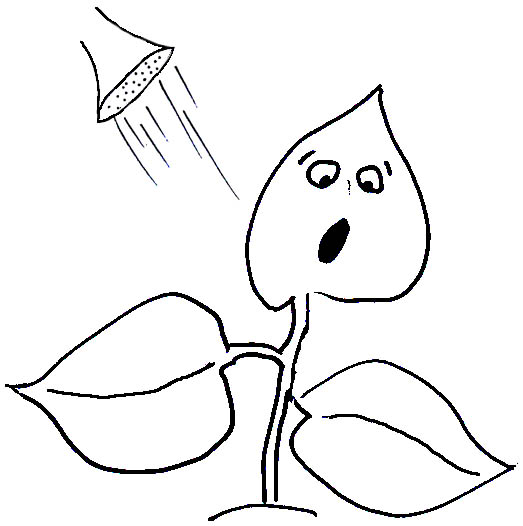
shocked bean plantAfter waiting your turn for the shower, you finally get your chance. You turn on the water, adjust the temperature, and step under the warm spray… which suddenly turns freezing cold as the hot water heater runs out of water. Yikes!

We don’t enjoy a sudden dousing of icy water. Neither do our plants. They may not look startled (how does a bean plant look startled?), but the cold water abruptly chills the soil and slows their growth. Since our growing season here in Colorado is often too short to begin wth, pouring cold water on our plants is to be avoided.

(more…)

Murdering Seedlings

Lettuce seedlings_LAH_9883I’ve waiting all winter for spring to finally arrive (and it took forever this year). The garden was planned, veggie varieties were chosen, seeds were ordered. When the package arrived, the seed packets were sorted and stuffed into baggies to wait until May. With the first warmer days, I finally ventured outside, prepared my planting beds, hooked up the soaker hoses, and sowed those seeds. Then I misted them daily, lest they dry out and die. Weeds sprouted and were carefully extracted from the seed bed. Then, at last, the first tiny cotyledons showed above ground. My seeds were germinating!

And now you want me to pull half of them out? You must be crazy!

(more…)

Hardy Ice Plant

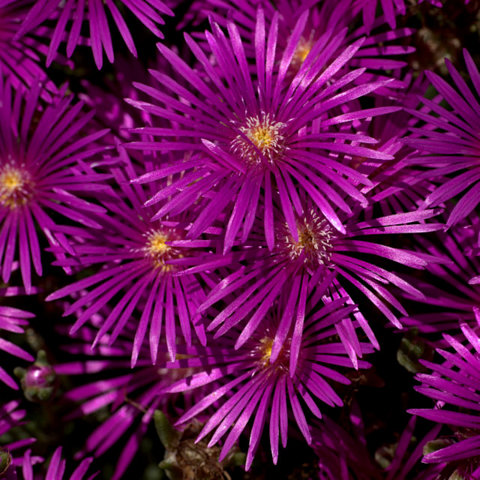
delosperma_hardy-ice-plant_xg_lah_2583Covering the ground with a solid mass of eye-searing fuchsia-purple flowers, Hardy Ice Plant (Delosperma cooperi) demands a second look. The succulent green leaves glimmer in the sun, giving the plant its common name, while the flowers have glistening thin petals surrounding a yellow center.

Waves of bloom carpet the foliage from late spring until late summer. The show even continues in winter, when plants turn a deep burgundy-red. Other species of Delosperma, with yellow or salmon-pink flowers, are also now available. Some have earned PlantSelect® honors.

(more…)

Patience Pays

2009-04-12 Easter morning snow 006One thing I’ve learned (the hard way) is that it pays to be patient. Rushing the season usually results in cold-stunted plants, reduced yields, or, even worse, losing an entire crop to a late frost or snowstorm.

For example, most garden guides tell you to plant broccoli and other crucifers early—two weeks before your average last frost date—as the young plants can stand some frost. What they don’t tell you is that prolonged exposure to cold temperatures will ruin your chances for a harvest. Two to three days of temperatures that stay below 40 degrees will fool the seedlings into thinking they’ve experienced winter (can’t blame them a bit!). Instead of growing up and producing the nice, succulent head you’re anticipating, the broccoli will try to force the issue and “button.” That is, it will rush to bloom while still small, and all you get is a one-inch (or smaller) head with a bitter taste and tough texture. Bleah!

(more…)

A Bucket of (water) Savings

Storm moving in_XG_20090826_LAH_9761Where’s the rain? Colorado, like much of the nation, is experiencing a severe drought. Last year brought us only half our average precipitation, and the preceding years haven’t been much better. Even the April storms we’ve had won’t eliminate the need for the water rationing that started April 1 here in Colorado Springs. Looking ahead to summer, we might be feeling a down. Who likes a brown lawn?

We garden for pleasure, to make our yards look attractive, or to provide fresh, healthy food that supplements what we buy at the grocery store. Farmers and ranchers, on the other hand, raise food for their livelihood—and so we’ll have something to buy at when we go shopping. A lack of water can be catastrophic, not only for their bank accounts, but for all of us who depend on their products.

(more…)

Taking Your Garden’s Temperature

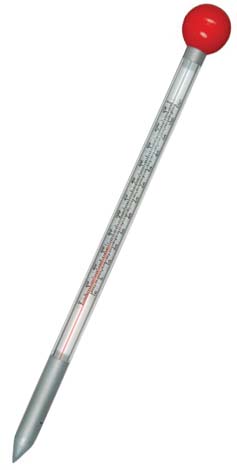
soil thermometerThe calendar says late April, the weekend forecast is warm and sunny, but there’s still snow melting off the trees and loitering in the shadows. With our off-again, on-again spring, how can a gardener possibly know when to plant?

There’s no foolproof formula, but a soil thermometer can help take much of the guesswork out of gardening in Colorado.

(more…)

Plant Some Spring Sunshine

Forsythia_DBG_20100417_LAH_2764Just when you don’t think you can stand another minute of bare branches or dead, brown-gray foliage, spring heralds its arrival in a burst of dazzling yellow. All over town, forsythias reassure us that the growing season really is at hand.

Originally from eastern Asia, where they have been cultivated for centuries, forsythias were collected for western gardens in the early 1800s. Most current garden varieties are hybrids of two species, Forsythia suspensa and F. viridissima. The problem is that the resulting cultivars aren’t reliably hardy in much of Colorado.

(more…)