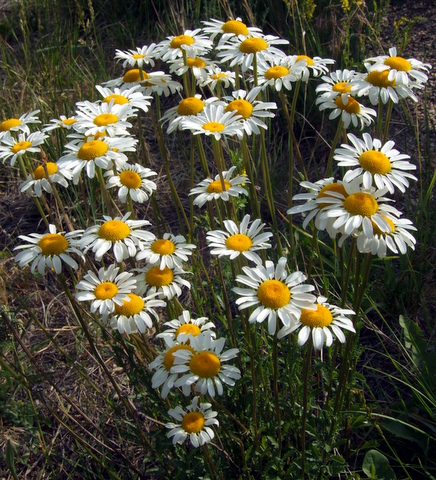
Heavenly Blue Wildflowers

Blue Flax_Durango-CO_LAH_2356Who doesn’t like blue? With clouds of sky-blue, 5-petaled flowers that seem to float among the surrounding foliage, Blue Flax is a welcome addition to any garden. A perennial hardy to 9,500 feet, the fountain-shaped plants are comprised of graceful, wiry stems reaching two feet in height, and embellished with blue-green needle-like leaves.

Flax’s open, airy stems tend to go unnoticed, but the abundant true-blue flowers will fill those empty spaces between more vibrantly colored blooms in a perennial border. However, flax is most at home naturalized into a grassy meadow, where it can mingle with blue gramma grass and other short-grass prairie wildflowers.
(more…)

Love Lies Bleeding

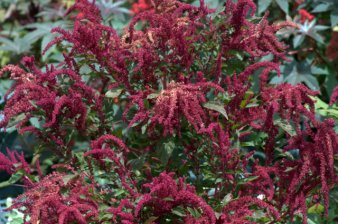
Amaranthus_DBG_LAH_7264Valentine’s Day is just around the corner, and what could be more appropriate than a post on a romance-themed flower: Love Lies Bleeding (Amaranthus caudatus). You have to wonder about this name, though. I get this mental picture of a jilted lover and a heartless ex. Which one of them did the stabbing?
Thankfully, the flower we call Love Lies Bleeding isn’t quite so melodramatic. It’s a member of the amaranth family from the Andes of South America, where it is known as kiwicha, and is now grown around the world.

(more…)

Colorado’s Iconic Blue Spruce

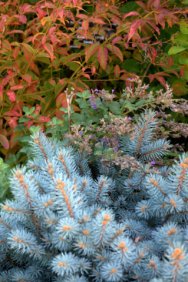
Bowman's Root and Blue Spruce_DBG_LAH_4163Colorado has a love affair with the blue spruce (Picea pungens). Perhaps we’re enamored with the striking, steel-blue tint to the needles, and the way the color causes fall’s orange leaves to glow. Perhaps we appreciate the towering, pyramidal shape of a mature tree, or the short and squat dimensions of a dwarf cultivar.

A number of gardeners I’ve talked to added a blue spruce to their yard because it’s Colorado’s state tree. Blue spruces may not be the easiest species for Front Range landscapes, but they’re definitely worth the effort.

(more…)

Green Leaves, Red Berries, Kinnikinnick!

arctostaphylos-uva-ursi-kinnickinnick-bearberry-csutilxeriscapegarden-9aug2006-lah166 Looking for year-round beauty and a plant that can handle a northern exposure, I planted six bearberries (Arctostaphylos uva-ursi) in our front yard this summer. Also known as kinnikinnick, bearberry is a good choice for Colorado, where it is native to the foothills and mountains. So far, I’m delighted to report that the plants are thriving. In fact, I can see a few green leaves poking up through the two feet of snow we got this week!

For our front yard, I wanted some plants that would stay green all year. Picking a few conifers was easy, even without resorting to junipers (which are not among my favorites!). Hoping for some variety, I wanted broadleafed evergreens too, and there aren’t many to choose from.

(more…)

Kintzley’s Ghost is Hauntingly Beautiful

Lonicera reticulata_Kintzley's Ghost Honeysuckle _DBG_LAH_1711You’ve put out the jack-o’-lantern, there are mysterious eyes blinking in the hedge, and spider webs festoon the front porch. It’s almost time to greet thus year’s trick-or-treaters. You think you’re ready, but there’s a good chance that you’re missing the pièce de résistance, the perfect, spooky vine to frame your doorway. You need to plant Kintzley’s Ghost honeysuckle!

This 2006 PlantSelect™ winner is the perfect plant for Colorado gardens, and not just because of its Halloween-evoking name. A cross between two Midwest natives, Lonicera reticulata (Grape Honeysuckle) and L. prolifera (Yellow Honeysuckle), this hybrid depends on weekly watering in more arid regions. Plants are hardy in USDA zone 4 through 8. Not fussy about soil, they thrive in full sun, but also tolerate afternoon shade. Another plus—the blue-green foliage is deer-resistant.

(more…)

Pretty, Pretty Coralberry

Symphoricarpos x doorenbosii 'Kordes' Amethyst_Coralberry_DBG_LAH_3100fLots of plants have pretty flowers or showy berries, are drought tolerant, handle clay soil, take full sun or part shade, or tolerate deer browsing on them. But how many plants have all these qualities? Coralberries are clear winners when it comes to choosing plants for our gardens. In fact, the only drawback comes when we try to pronounce their scientific name: Symphoricarpos orbiculatus!

If you’re into plants, you might recognize the genus. Symphoricarpos also includes Snowberries, S. albus, and the plants are fairly similar.

(more…)

Ditch this Dame

Worth growing for its delicious ­­­­­­fra­grance­ alone, dame’s rocket also offers showy, long-lasting flowers and is as trouble-free an herb as you could ask for. Its multitude of common names attests to centuries of cultivation in gardens and to the high regard in which it has been held. (Mother Earth Living)

Hesperis matronalis_Dame's Rocket_ColoSpgs-CO_LAH_7355How can you resist such a glowing recommendation? It’s true that dame’s rocket is all these things, but it is also an invasive outlaw, wanted dead, not alive. Like any most-wanted suspect, Hesperis matronalis hides under a plethora of aliases: damask violet, dame’s-violet, dames-wort, dame’s gilliflower, night-scented gilliflower, queen’s gilliflower, rogue’s gilliflower, summer lilac, sweet rocket, mother-of-the-evening, vesper flower and winter gilliflower, to name a few. But not matter what you call it, it’s against the law to grow this plant in Colorado.*

(more…)

Sweet, Sweet Honeysuckles

I sat me down to watch upon a bank
With ivy canopied and interwove
With flaunting honeysuckle. (John Milton)

Lonicera sempervirens_Honeysuckle_DBG_LAH_6903Mention honeysuckle, and we think of green hedgerows, sultry summer days, and childhoods spent picking the flowers and putting them in our mouths to suck out the sweet nectar. There are around 180 species in the genus Lonicera. Fast growing and tolerant of inhospitable conditions, honeysuckles have much to recommend them. Many are valuable landscape plants able to withstand Colorado’s challenging conditions while presenting us with beautiful flowers and berries adored by birds.

(more…)