
(Digitalis thapsi)
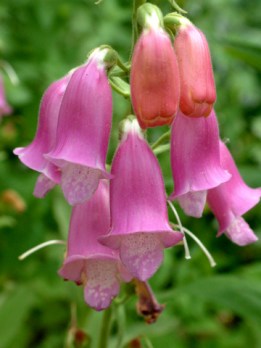 With one- to two-foot spikes of raspberry-pink flowers over a tidy mat of fuzzy foliage, perennial foxglove ‘Spanish Peaks’ isn’t your typical foxglove. Instead of the cool humidity of the British Isles, this hybrid is specifically recommended for Colorado gardens, doing well in our arid and unpredictable climate. As a result, it was named a Plant Select winner in 1999. The cultivar’s name reflects both the plant’s Spanish origins, and it’s suitability to Colorado, home of the Spanish Peaks.
Although attractive to bees and hummingbirds, ‘Spanish Peaks’ is usually disliked by rabbits and deer—probably due to its poisonous foliage. (The drug digitalis comes from plants in this genus.)

 Appearance

 Today is Arbor Day, the traditional day for planting trees. Most of us treasure trees. Planting one is an act of faith, something we do for our children, and perhaps our grandchildren. Sadly, thousands of our nation’s trees now reaching maturity are destined to an early death. They were doomed the day they were planted.
 It’s spring. I’ve been digging in the garden—at least between snow storms. My back muscles (and knees and shoulders) ache, there’s dirt under my broken fingernails, and a huge smile on my face. In fact, there’s dirt in my teeth—I’ve been pulling weeds and shaking the soil off their roots before piling them into the compost bucket, and I keep forgetting to close my lips.
 Tomorrow is Good Friday, the day Jesus wore a crown of thorns. In visualizing that painful headpiece, it helps me to think about the sharp spikes on the plant with the same name.
 You’re gotten your test results back from the soil lab, telling you to add some organic matter. What’s the best thing to add?
