
 If you planted green beans in May, and your garden survived our huge hail storm in June, you should be looking forward to your first harvest this month. While we sweat and complain about the record highs, beans like it hot and they’ve been growing like crazy.
There are hundreds of bean varieties, and even catalogs that specialize in beans of all sorts. I’ll share my favorites. Which ones are yours?
 Colorado isn’t an easy place to garden. Drought, late frosts and early snow storms, soils of sand and/or clay… to grow anything here, you have to be stubborn—and so do your plants. Our recent storms were so destructive, I thought I’d post something about how you can avoid a lot of hail damage in the first place. At least for ornamental landscapes, the key to surviving hail is plant selection.
 Last week, our part of the world was hit by a horrific hail storm. Drifts (if you can call them that) measured four feet high. Houses, cars, and, of course, gardens were ruined by hailstones the size of golf balls (as this photo by Pam Woodward proves). It’s quite shocking to watch from your window and see thousands of hail stones plummeting your favorite garden. Do not despair—the plants may recover! Hail usually does not damage the root system. Here are some things you might do to help your plants survive and even thrive:
 It had been raining all week, quite normal for western Washington in late May. We were near Seattle, visiting our brand new
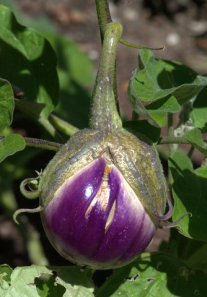 Eggplant Parmigiana, Moussaka, Moroccan Eggplant Salad, Baba Ganoush… there are plenty of delicious ways to eat eggplant. Growing it in Colorado is a whole different story. A native of warm and humid southeast Asia, it takes a bit of persuasion to convince this tomato family member to thrive in our cool, dry climate.
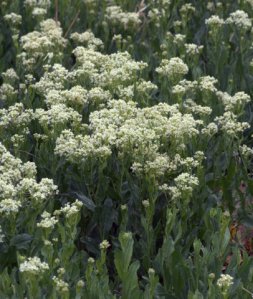 Spring flowers are finally filling the fields. Milk vetch, penstemons, wild onions and marsh marigolds all caught my eye as I hiked though the towering cottonwoods along Fountain Creek, at the base of the Rockies here in central Colorado. I was particularly impressed by huge swaths of a foamy white flower I didn’t immediately recognize.
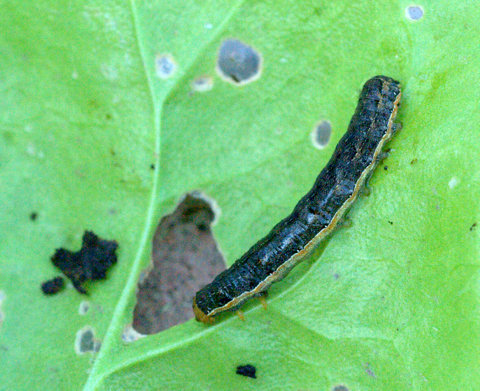
 Is your garden being bugged? While 95% of all insects are either beneficial or benign, that last 5% can eat us out of house and home—or at least out of cabbage and broccoli. If insect invaders are on the attack, sometimes you just have to fight back.
 Mountain Plover