
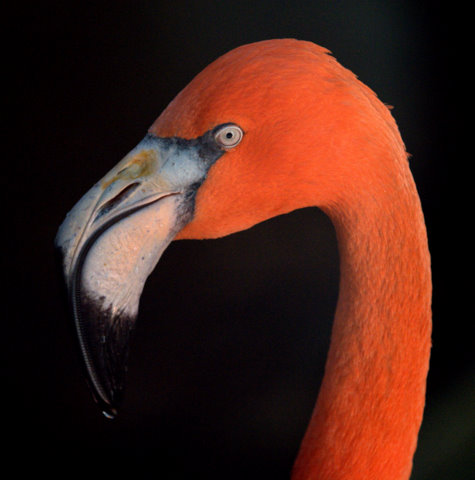
 When I was growing up, our elementary school classrooms were always decorated in seasonal colors… black and orange for October, red and green in December, and pink and red for February. Therefore, in honor of that long-lasting tradition, today’s post is about one of our most popular pink birds.
When we think of pink, the first bird that probably comes to mind is the flamingo. While there are six species of flamingo worldwide, and four in the Americas, only one is found wild in the United States—the American Flamingo. Even then, it takes a lot of effort and even more luck to actually see them in the US. Their normal range encompasses the Caribbean and the Galapagos (these two populations are divided into two subspecies), and only rarely are they seen near the southern tip of Florida. (more…)
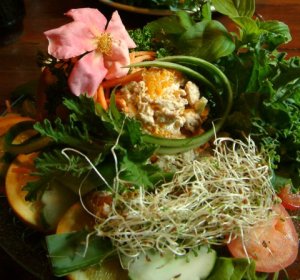 I love salads. Wash and tear some crisp, homegrown lettuce. Add a few sprouts, some mizuna leaves (mizuna grows exceptionally well in my garden) and other greens. Slice up some green onions, cucumbers and tomatoes, throw in a few flowers, and whisk together a light vinaigrette to pour over the top. Toss it all together, and yum!
 I’ve learned the lesson once again. If you stay home, you won’t get any photos. If you go out, you may still come up empty handed—or you just might be surprised.
 Are you staring out the window, watching the snowflakes, and desperately wanting to plant something? Guess what—you can! It may be too early to start tomatoes and broccoli, but lettuce seedlings can handle the cold with a little protection. So pull out the recycled six-packs and potting soil, soak your peat pots, and clear some space on the counter. It’s planting time!
 Does chaffing wind have you pining for gentle tropical breezes? Do the empty branches of your shrubs and trees leave you starving for bright green foliage? Are you dreaming of the scent of gardenias and orange blossoms?
 You don’t need to buy a plane ticket. Just head over the Denver Botanic Gardens’ new greenhouse complex. Walk through the door and your senses are engulfed by luxuriant growth. Feast on the bright colors and fascinating shapes of plants from faraway places. Inhale the humid air that keeps these exotics healthy and blooming. Pretend you are far, far south of Colorado.
 From the big questions (how many species of birds are there?) to specifics (should the Bullock’s Oriole and the Baltimore Oriole be merged into one species called the Northern Oriole?), birders have long endured a bit of confusion. It seems even the most eminent ornithologists disagree on these and similar conundrums.
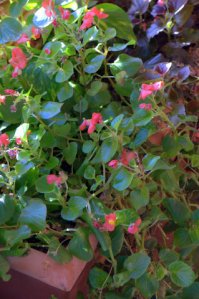 What plant thrives indoors, shrugs off low humidity, and blooms all winter in bold shades of white to pink to red? Surprise! It’s wax begonias!
 If you are a serious birder, you probably keep a life list. As any collector understands, adding birds to that list brings a sense of elation, accomplishment and satisfaction. However, if you’ve been birding the same place for very many years, you probably have already seen most of the birds in your area.

