
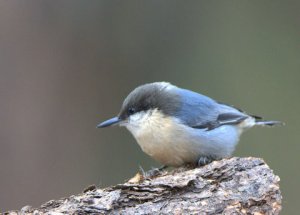
 They’re adorable, with their short stumpy tails, tiny bodies and toddler-round tummies. They’re constantly active, hopping from branch to branch. Can you tell? Pygmy Nuthatches are one of my favorite birds! I love to watch them fly down to the feeder to grab a seed, then bolt back into safety before “hacking” (“nut hack” has become “nuthatch”) the sunflower shell open against a branch. Sure seems like a lot of work, especially compared to the finches who just sit there shelling and swallowing seeds as fast as they can.
Like so many other animals—dolphins and penguins come immediately to mind—Pygmy Nuthatches are dark on top and light underneath. This pattern helps disguise them from potential predators. Seen from above, their dark gray color blends with the ground (or tree trunks), while their white undersides are hard to spot against a brightly lit sky.
 The gift-giving season is upon us, and many people are scratching their heads, trying to figure out the perfect gift for that special birder in their life. I thought I’d make it a little easier for you and spell out exactly what I would like to receive this year. I bet other birders would like many of the same things as I do. (I seem to be into lists lately.)

 With temperatures dipping into the low 20s and our first (finally!) snowfall, the bugs in our gardens are either dead or in hiding. But before we collapse into that comfy recliner with a garden book and a cup of tea, we need to take a good look at our houseplants. It might be winter outside, but indoors the bugs are having a field day.
 The seasons have changed. The grosbeaks, hummingbirds, and other birds of summer have left for more tropical climates, but they’ve been replaced. Ducks, loons and grebes that spent the summer in the far north are showing up on local ponds. Rough-legged Hawks sit where Swainson’s hung out a month or two ago. Sandhill Cranes are headed for their winter feeding grounds in New Mexico. Instead of Chipping Sparrows at my millet feeders, I have flocks of Juncos.
 I recently posted my
  Just the title evokes images of a Japanese horror movie with giant beetles running down the streets of Tokyo, grabbing screaming people and crunching them between its mandibles.
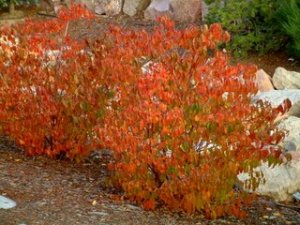 You’ve never noticed the shrub before. Its rounded green leaves and vase shape let it lurk unobtrusively in the background, where it may eventually grow to 15 feet tall and wide. Then, seemingly overnight, there’s a neon-fuchsia beacon glowing in the landscape. Fall has arrived, and the Burning Bush is on fire.
