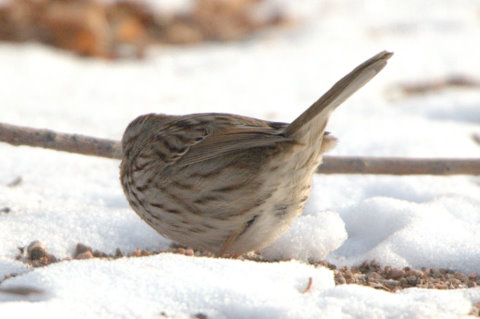
To refresh your memory, here is the photo from October’s Bird Quiz. It was taken in Louisiana during the month of January. Don’t read any further if you want one last chance to identify this bird.
I prefer to write my own posts, but when I saw this article from the U.S. Fish and Wildlife Service Division of Migratory Birds, I had to share it with you. I had no idea that open pipes were such a hazard to birds and other wildlife!
Death by Pipe: Birds in Crisis
Bird carcasses recovered from mining claim pipes in Searchlight, NV. Photo: Christy Klinger, Nevada Dept. of Wildlife
Trapped in a small space, unable to move, with no food or water, slowing dying of stress, starvation, or dehydration; most of us can’t imagine a less appealing end. Unfortunately, this is the reality for hundreds, thousands, possibly millions of birds and other animals each year. Recent inspection of open or uncapped pipes has uncovered a grisly secret: countless bird and other animal carcasses collecting inside. Open or uncapped vertical pipes pose a very real hazard to wildlife, especially birds.
I was so excited—I was flying to Washington to visit our daughter and her family. Of course, the main point of the trip was to hug our baby granddaughter, but I was also hoping to do a bit of birding while in a different state. The problem was, I didn’t know a single birder near Everett (north of Seattle), I didn’t know where the good birding sites were, and even if I did, the roads were unfamiliar enough (and traffic crazy enough) that I was sure I’d get lost.
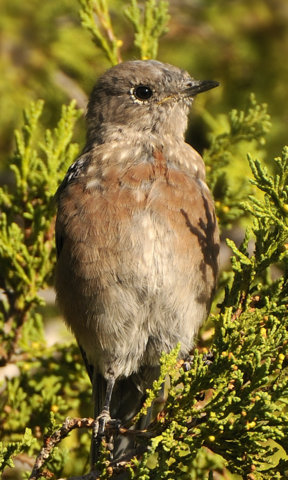
To refresh your memory, here is the photo from September’s Bird Quiz. It was taken in Colorado during the month of September. Don’t read any further if you want one last chance to identify this bird.
I was watching a skein of geese flying south for the winter, individuals arranged in a typical V-shape, each bird pumping its wings up, down, up, down, hour after hour after hour. Just watching them, knowing how many hundreds, thousands, of miles they had to go before they reached their destination, made me exhausted.
Then there are the songbirds, who migrate so high that we don’t even notice them. How do they travel such long distances, exerting themselves where the air is so thin? Even more, they can fly and vocalize at the same time. (When I’m hiking at high elevations, it’s all I can do to gasp for air; I can’t even talk, much less sing!)
Last spring, our Audubon chapter organized a field trip to a Nature Conservancy property, the Brett Gray Ranch. Located out on the short-grass prairies east of Colorado Springs, the ranch has widely diverse habitat. Dry grasslands, riparian cottonwoods, marsh and pond attract birds from miles around to eat and drink at this oasis on the plains.
Our group included several “power birders,” luminaries who excelled at spotting and identifying rarities. I was eager to follow in their footsteps. Lugging my largest lens and bulky tripod, I just knew I was going to get spectacular photos.




 Last spring, our Audubon chapter organized a field trip to a Nature Conservancy property, the Brett Gray Ranch. Located out on the short-grass prairies east of Colorado Springs, the ranch has widely diverse habitat. Dry grasslands, riparian cottonwoods, marsh and pond attract birds from miles around to eat and drink at this oasis on the plains.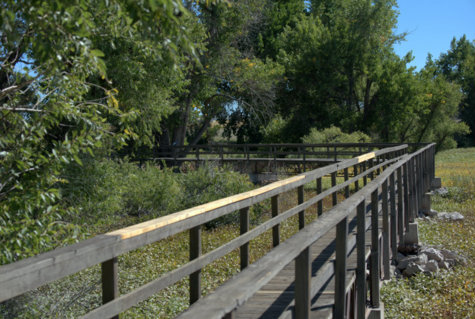
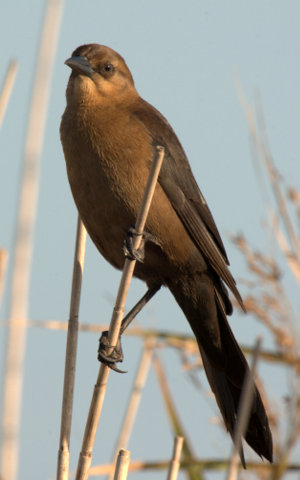
 Mountain Plover