
 Santa is making his list—what do birds want for Christmas? There are all sorts of recipes and projects that are meant for wild birds, but so often they’re actually meant to keep us birdwatchers entertained. No one asked the birds for their opinion.
If you really want to please the birds, how about…
A special treat to eat
One year I received a pine cone, cleverly rolled in suet and peanut butter, then in millet. The greasy mixture held (most of) the seed in place. It was adorned with a ribbon for hanging outside as a treat for the birds.
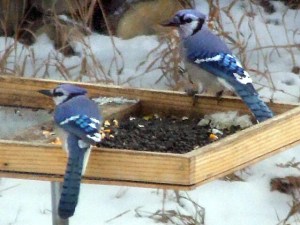
 We had been camping at Turquoise Lake, near Leadville, Colorado, high in the Rockies. As it was lunchtime, we spread out a tablecloth, set out a bowl of chicken salad (with chicken, grapes, celery, and pecans), and went to find the plates and forks. But as I returned to set the table, the salad seemed to be missing something… the pecans were gone! Seems we’d been victims of the camp robber!
 At some time of another, most birders have a “nemesis bird”—that species you really want to see but you always seem to show up a minute too late. Or you show up in the wrong spot. Or you hear, “We always get that bird on this trip; I don’t know why it’s not here now!”
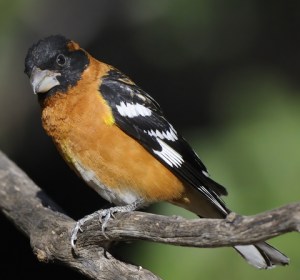 Male ducks don’t look anything like female ducks, at least during the breeding season. And you can easily tell the boy Black-headed Grosbeaks (right) from the girls (below)… in fact, they don’t look like they even belong to the same species! But with lots of birds, from Steller’s Jays to Canada Geese, it seems that only they know who is who.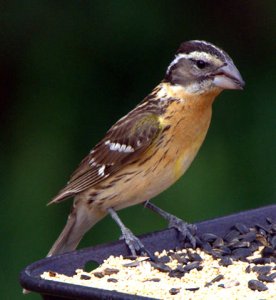

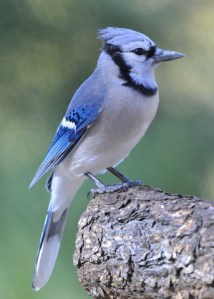 Honk, honk
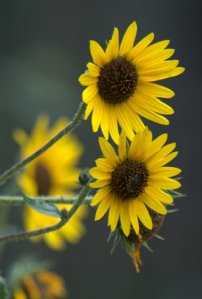 This year, the birds planted themselves a garden.
 Yesterday morning, I went out to tend my flock, and realized that my new pullets, hatched around June 1, were nearly the same size as my mature hens. When they were mere children, they fit just fine in their twelve square foot cage (above). (For their safety, it’s important to separate young birds from the main flock.) Now, however, it was clear that they needed more room. Although I had planned to wait until next month, I decided this was the time to release them into the main coop.
 This is the third and last part on how my daughter the anthropologist looks at birders. Don’t miss
  I’ve already mentioned clothing, but in general, wearing white is frowned upon. It scares many birds, thus annoying many birders. The same thing applies to loud noises. Most birders talk in hushed voices, at least while on the trail.
 Mountain Plover