
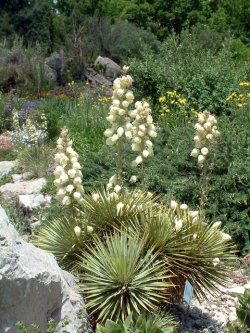
 Yuccas are as much a part of the Colorado landscape as red rocks and towering peaks. I admit, I didn’t like them at all when we arrived 25 years ago. Yuccas? Yuck! But in the intervening years, they’ve grown on me. I now acknowledge that yuccas have their place—as long as it isn’t in my yard.
I think my initial antipathy came from driving by a yard in a Colorado Springs neighborhood. The homeowners clearly didn’t want to deal with landscape maintenance; their front yard was mostly rocks. A scraggly Ponderosa sat to one side. The only other plants were a few yuccas stuck between some ugly boulders. It was probably intended to be a xeriscape. I thought it was a “zeroscape”!
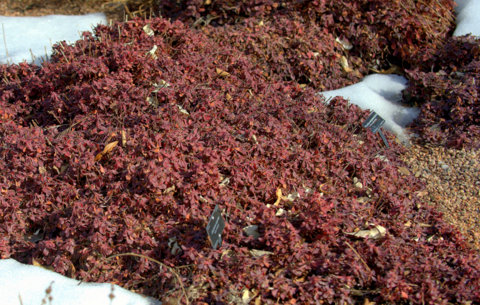
 We had our first hard freeze over a month ago. Most of the deciduous plants and perennials in my yard are now dormant—some with dry brown leaves still attached, others with bare stems. But remarkably, not everything looks dead. In fact, a surprising number of plants still sport green foliage.
 When you have a smaller yard, you want every plant to earn its keep. With fragrant yellow flowers, blue berries, and green leaves that turn purple in winter, Creeping Mahonia (aka Oregon Grape, Mahonia repens) definitely deserves a spot!
 Looking for year-round beauty and a plant that can handle a northern exposure, I planted six bearberries (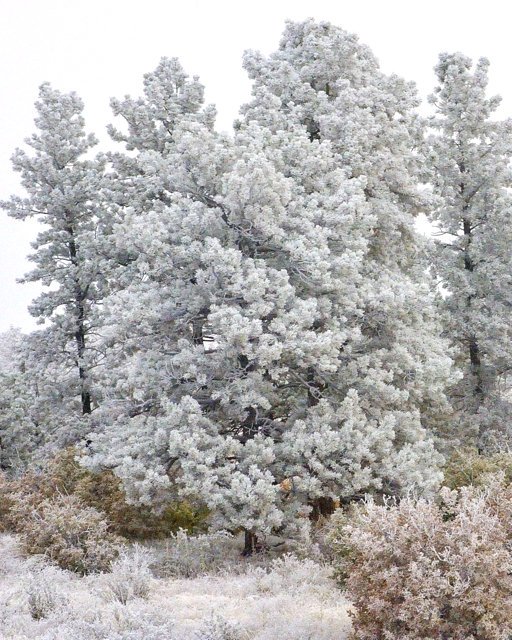


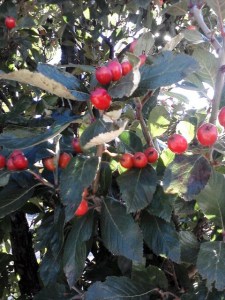 “Deck the balls with boughs of holly” might work well in Merry Olde England, or even in the eastern U.S., but it’s not very practical at my house, just north of Colorado Springs, Colorado. We have too much sunshine, the air and soil is too dry, and our soils are too lean and too alkaline. Holly won’t survive winter’s dessicating winds. At least, that’s what I learned when we moved here.
 Mountain Plover