Whitetop (aka Hoary Cress)

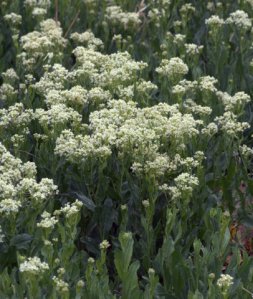
whitetop_fcnc-co_lah_0313Spring flowers are finally filling the fields. Milk vetch, penstemons, wild onions and marsh marigolds all caught my eye as I hiked though the towering cottonwoods along Fountain Creek, at the base of the Rockies here in central Colorado. I was particularly impressed by huge swaths of a foamy white flower I didn’t immediately recognize.

Counting the petals—each tiny flower had four—and examining the foliage led us to conclude the plants were Crucifers, members of the mustard family. Sure enough, we were enjoying the pretty flower heads of Whitetop (Cardaria draba), an aggressive import from Europe and Asia that is listed as a noxious weed here in Colorado (List B). Oh dear.
(more…)

More Than Birds

aiken-hikers_kcs-co_lah_3245

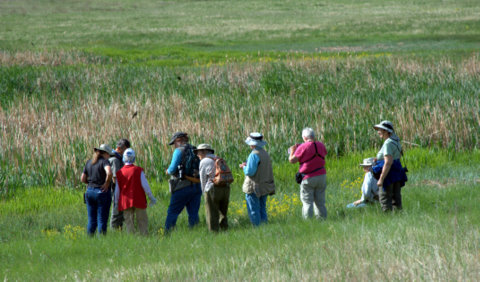
I went on a short hike the other day, and I almost didn’t bring my binoculars.

This is a pretty radical statement for an ardent birder to make, so let me explain. Even though the hike took place on property belonging to Audubon, our purpose was to look for wildflowers, not birds, and to create the beginnings of a plant checklist that would be added to in the following years. Specifically, my job was to photograph what we found.

(more…)

Beautiful Edibles

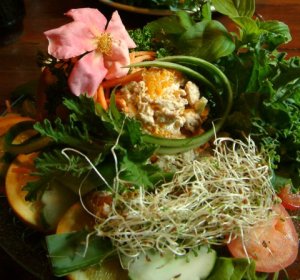
733-lunch-1I love salads. Wash and tear some crisp, homegrown lettuce. Add a few sprouts, some mizuna leaves (mizuna grows exceptionally well in my garden) and other greens. Slice up some green onions, cucumbers and tomatoes, throw in a few flowers, and whisk together a light vinaigrette to pour over the top. Toss it all together, and yum!

Wait, you say. Flowers? You put flowers in your salads?

(more…)

Bogus Bushes and Plastic Peonies

plastic-flowers-wilkes-2008aug28-lah-153It’s November. Bushes have bare branches, perennials are dead, dried stalks. Except for a few hardy groundcovers and various conifers (pines, junipers, and the like), the landscape is asleep. Except… wait! Are those daffodils in that flower bed? And does that window box really have bright red, white and blue flowers in it at this time of year?

There seems to be a new trend in town. Maybe it’s because our growing season is so short. Maybe it’s because water is expensive and limited. Maybe people are just tired of doing yard work. But whatever it is, it’s growing… or, rather, it isn’t.

People are landscaping with (gasp) fake flowers! (more…)

Blooming Seedheads

seedhead_emeraldvalleyco_20090630_lah_5364xc4x6Some are ephemeral, shattered by the slightest breeze into a thousand tiny parachutes. Others hang on all winter, beautifying the garden like subdued flowers. At this time of year, with most flowers past their prime, seedheads come into their own.

When creating a landscape, designers usually consider shape and form, colors, texture, flowers and leaves. Rarely are seedheads part of the equation. But in a climate such as ours here in Colorado, many plants are dormant at least as long as they are in active growth. Their winter appearance matters.

Plants with persistent seedheads abound. Just as when we combine flowers of differing shapes and colors to produce a pleasing synergy, we need to consider the color, shape, and texture of seed heads.

(more…)

Gardeners, Start Your Bulbs!

crocus-blackforest-27mar2006-lah-001-cropThe first crocus of spring. Sunny yellow daffodils naturalized under trees. Beds full of crimson tulips—it all starts now.

After gardening all summer, it’s hard to add yet another chore to the pile of things to do this month, but planting bulbs should be near the top of the list. Getting them in early not only affords you the best selection at the garden center, but gives roots time to grow in still-warm soil, preventing frost heave and providing the best start to next spring’s bloom.

Pick a location that gets plenty of sunlight, particularly if you intend for your bulbs to come back year after year. Most bulb species bloom well the first year, but here in Colorado they tend to diminish with each successive growing season. Especially in the case of tulips, assume that you will need to replace them annually for the best display. Even other species will need ideal growing conditions if they are to increase in size and number.

(more…)

January Blooming

viola-in-snow_dbg_10200118_lah_6906xBlooming? In January?

I spent a day last week at the Denver Botanic Gardens. The weather was sunny and warm, with highs in the 50s, and I just couldn’t stay indoors. I figured I’d walk around and take pictures of the dormant plants—some look better than others at this time of year—and hardscape features. Well-designed gardens have appeal in January as well as July, and these certainly qualify as well-designed.

As I expected, the conifers and evergreens (such as Mahonia) dominated the landscape, along with the warm golds and coppers of the ornamental grasses. I was happily snapping photo after photo, enjoying the beautiful day, when I saw something peeking out from under some melting snow—several somethings—yellow and purple somethings.

(more…)

The Clover and the Plover

clover

This is taken from a wonderful little book entitled How to Tell the Birds from the Flowers: A Manual of Flornithology for Beginners, by Robert Williams Wood. I’d urge everyone to get a copy, but it was originally published in 1907, and has long been out of print.

Happily, Google has digitized the entire book, so you can read it online. I hope everyone will take the time to do this!

What are your flowers up to?

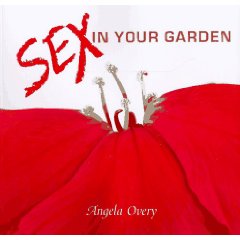
sex-in-your-gardenSex in your Garden, by Angela Overy

“In gardens, beauty is a by-product. The main business is sex and death.” —Sam Llewelyn

With the accuracy of a botanist and the flair of a Madison Avenue advertising agency, Angela Overy (yes, that’s her real name) has produced an exceptional guide to plants and sex. Lest you think this is a dull subject, let me assure you that you will be fascinated by her lurid descriptions of the myriad ways plants manage to achieve pollination.

As living things that can’t get up and pursue a mate, you would think plants are at a disadvantage when it comes to reproduction. Reading this book will dispel any such notions. Colors and scents are just the beginning. Some plants go to great lengths to please a pollinator, others actually eat those who try to help them. Bats, beetles, birds and, amazingly, possums join the ranks of those who do the plants’ dirty work. Even people get into the act.

I particularly love the way Overy juxtaposes photographs of flowers with pictures of models, largely taken from advertising. It seems that life is largely about selling, and we’re all going about it in the same way. Tantalizing forms, bright colors, offers of rewards … isn’t that how we make things attractive?

Enjoy this book and I promise—you’ll never again consider flowers in quite the same light.

Flowering Crabapples

Malus Crabapple
The very cold nights we had last month, coupled with recent snowstorms, have badly damaged flower buds on crabapples and other popular spring bloomers.

Flowering crabapple trees, with single to double blooms of white, pink, or carmine, are a beautiful symbol of springtime. Varying widely in form, cultivars range from small upright trees 15 feet tall to umbrella-like specimens more than 30 feet across. Some form narrow columns; some are weeping. Many produce small, ornamental fruit that lasts all winter, in shades of yellow, orange, or red. The simple green leaves of some varieties may have a reddish cast, especially in the spring. ‘Indian Summer’ is an example having orange fall foliage. ‘Molten Lava’ has attractive yellow bark. With over 200 cultivars available, you can choose a tree that matches your site and provides four seasons of garden interest.

(more…)