
 Now that the winter’s first hard freezes have arrived, fresh homegrown produce is in short supply. The season my be over for frost-tender summer squash, vine-ripened tomatoes, peppers and eggplant, but with some preparation, you can enjoy at least one crop that can be harvested from mid-summer through fall and winter, until the days start to warm again. There’s nothing like going out to the garden in December, brushing off some snow, carefully digging into the cold soil, and pulling up some crisp, bright orange carrots!
Tag: garden
Spinach
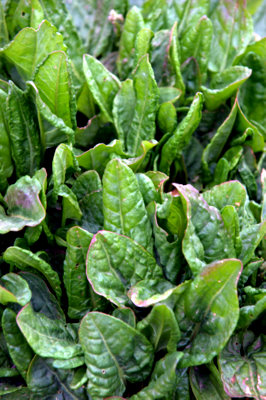 True confessions… I am allergic to spinach. Very sad, I know. So, I don’t grow it. Everything I’m about to tell you about spinach cultivation I learned from such wise gardeners as David Whiting, Colorado State University professor and State Coordinator for the Colorado Master Gardener Program, and Diane E. Bilderback, one of my favorite garden writers (and, along with Dorothy Hinshaw Patent, author of my favorite veggie gardening book, Garden Secrets).
The first tricky thing about spinach is when to plant it. Being extremely day-length sensitive, it is sure to bolt when it receives 14 or more hour of daylight per day. You can squeeze in a crop as soon as the weather is warm enough (and thankfully, spinach is relatively hardy), or wait until days are getting shorter again and plant for a fall harvest.
Hudson Gardens: A Littleton Oasis
 Labor Day is past, but there’s no reason to sit inside and sulk. Fall means blue skies and more moderate temperatures beckoning us back outdoors. One of the best gardens to visit at this time of year is Hudson Gardens, in Littleton, Colorado. Situated along the South Platte River, you can enjoy 30 acres of flowers, shrubs, trees, and grass—from exotic annuals to water lilies.
Once a private estate, the gardens are now open to a public, and right now, there isn’t even an admission charge. You can’t beat that! (There may be a small fee during the peak summer season.)
Amy’s Garden

After months of planting, watering, mulching, and pulling weeds, I tend to run out of steam by the end of August. The heat and the bugs are taking their toll, we’re actually getting a little tired of zucchini (imagine that!), and I am in desperate need of encouragement.
When my friend Amy asked me to come see her new garden, I jumped at the chance. She wanted some advice, but I wanted motivation Looking at someone else’s plot always inspires me to get back outside in my own veggie beds.
Annual Sunflowers
 Sunflowers may resemble a huge yellow sun towering overhead, but their name comes from their ability to keep their “face” turned toward the sun. Everyone recognizes a conventional sunflower with its huge dark disk surrounded by yellow petals, set atop a sturdy stalk that may reach over eight feet in height. A quick tour of a seed catalog shows that this is just the beginning. Breeders have developed shorter plants (as low as two feet) and an expanded palette of hues ranging from mahogany through orange to lemon yellow, white, and even soft rose to wine-red. Many types sport more than one color.
Firewise Landscaping Help

Just a quick heads-up. Do you live in an area in danger of wildfire? After the Waldo Canyon fire here, and many others around the West, we’re all more aware of the potential for disaster.
Firewise landscaping can make the difference between saving your home, or watching it burn. Carey, over at Pikes Peak Area Garden Help, posted an excellent list of links about gardening in a fire zone. Rather than repeat her efforts here, I strongly urge you to check out her post:
Landscaping in High Fire-Danger Areas
IPM: Cultural Control
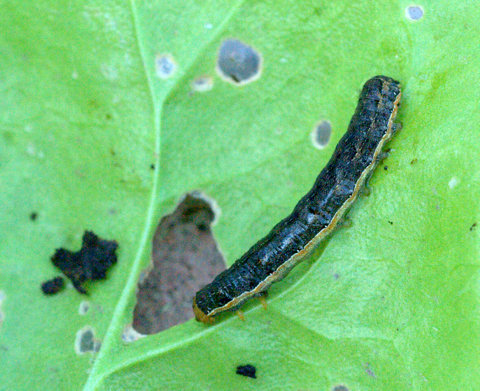 The best way to ward off insect and disease problems is to grow a healthy plant. Just as a wolf pack will target the weakest member of a herd, insects seem to zero in on a plant that is under stress. Good gardening practices—choosing the right plant for the spot, soil preparation, proper planting, feeding, watering, mulching, and the like, all go a long way to keep our gardens free of damaging pests.
But cultural control goes further than just having a green thumb. Sometimes our yards are invaded by insects no matter how good a gardener we are. In that case, it pays to know the enemy.
Hail Survivors
 Colorado isn’t an easy place to garden. Drought, late frosts and early snow storms, soils of sand and/or clay… to grow anything here, you have to be stubborn—and so do your plants. Our recent storms were so destructive, I thought I’d post something about how you can avoid a lot of hail damage in the first place. At least for ornamental landscapes, the key to surviving hail is plant selection.
A tour of the garden after a major hail storm will reveal some plants that are totally destroyed while others have nary a bruised leaf. What makes some plants hail-resistant?
After the Storm
[This article, by Joan Nusbaum and I, originally appeared in the Colorado Springs Gazette in 2005. I have edited it to make it even more applicable after last week’s storms!]
 Last week, our part of the world was hit by a horrific hail storm. Drifts (if you can call them that) measured four feet high. Houses, cars, and, of course, gardens were ruined by hailstones the size of golf balls (as this photo by Pam Woodward proves). It’s quite shocking to watch from your window and see thousands of hail stones plummeting your favorite garden. Do not despair—the plants may recover! Hail usually does not damage the root system. Here are some things you might do to help your plants survive and even thrive:
Lakewold Gardens Estate
 It had been raining all week, quite normal for western Washington in late May. We were near Seattle, visiting our brand new granddaughter (our first) and her parents. But then, unexpectedly, the constant drizzle turned into blazing sunshine and dazzling blue skies! Being a gardener, I immediately looked for the closest public garden to visit.
In this case, Pete and I took an afternoon off to spend some time at Lakewold Gardens Estate, just off I-5 in Tacoma. Once the home of Mr. and Mrs. Corydon Wagner, the estate is now owned by a non-profit group specifically dedicated to preserving the gorgeous plantings and lovely house. The property fronts Gravelly Lake and, weather permitting, provides spectacular views of Mt. Rainier.
 Mountain Plover