

In honor of today being St. Patrick’s Day, I thought I’d celebrate “green” in the garden. No, I don’t mean about being environmentally friendly, although that’s certainly important. I’m talking about just plain green… as in chlorophyll-laden leaves.
This time of year, I’m pretty frantic for anything green. There aren’t many broad-leaved evergreens that tolerate Colorado’s winters. Even the conifers are more a blackish-olive drab—not nearly as nice as the “pine” of the decorating industry. Cold weather does that to leaves: many junipers turn plum-purple in winter. Leaves should not be that color. (Mahonia wears the same hue, but manages to look more attractive in it.) Hardy ice plant glows red, and ornamental grasses shimmer in copper and gold. Mostly, however, things look dull grayish brown, or just plain dead.
 It’s November. Bushes have bare branches, perennials are dead, dried stalks. Except for a few hardy groundcovers and various conifers (pines, junipers, and the like), the landscape is asleep. Except… wait! Are those daffodils in that flower bed? And does that window box really have bright red, white and blue flowers in it at this time of year?
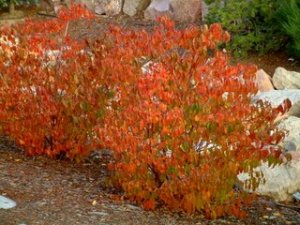 You’ve never noticed the shrub before. Its rounded green leaves and vase shape let it lurk unobtrusively in the background, where it may eventually grow to 15 feet tall and wide. Then, seemingly overnight, there’s a neon-fuchsia beacon glowing in the landscape. Fall has arrived, and the Burning Bush is on fire.
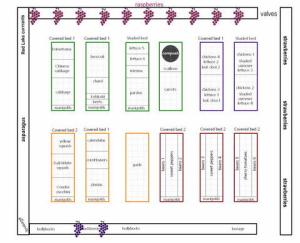 Are you tired of gardening? We’ve had a longer-than- average growing season this year, and the weather is still warm enough to encourage flowers to bloom and pumpkins to turn orange. If your kitchen counter is piled high with zucchini, and you’re actually getting a tad tired of vine-ripened tomatoes, this is the perfect time to plan next year’s garden.
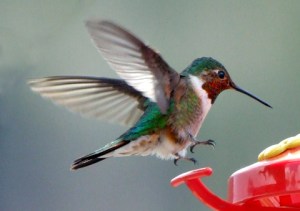 A brightly colored hummingbird zooms past on its way to a feeder. A finch fills the air with music. Birds provide us with hours of entertainment. How can you welcome more wild birds into your yard?
 While we all want to gain maximum use from our yards, it’s very helpful to prioritize. Perhaps you entertain a lot, and your garden wish list includes a deck or patio, a fire pit, and a lawn for playing games. Or perhaps you are the introspective sort, and you want a garden bench under an arbor, a reflecting pool, and paths wandering through your plantings. My priorities include food and water for the birds, a secluded place from which to watch them, and a vegetable garden. Limiting yourself to three main features brings a sense of unity to your landscape.
 Mountain Plover