
 Everything is growing. Buds are bursting, early flowers are in bloom, and millions of tiny seeds are breaking through the soil into eager growth. It’s a wonderful time of year, and a busy one for gardeners. As we sow seeds and pull weeds, the question arises—which is which? Should we dig out that clump of green, or is it a desirable plant?
This is especially difficult if it’s a new yard, and this is our first chance to see what’s growing in it. Let me tell you a short story illustrating my gardening ineptitude.

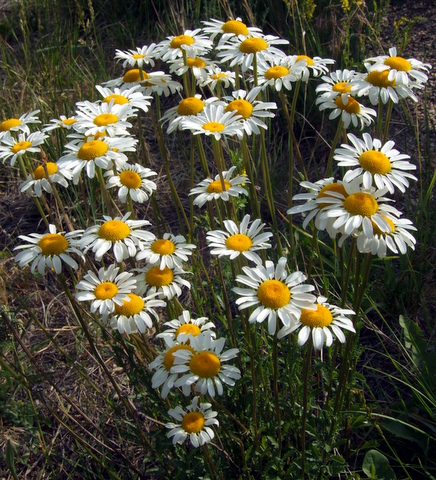
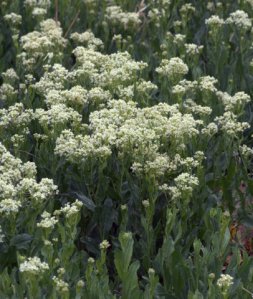 Spring flowers are finally filling the fields. Milk vetch, penstemons, wild onions and marsh marigolds all caught my eye as I hiked though the towering cottonwoods along Fountain Creek, at the base of the Rockies here in central Colorado. I was particularly impressed by huge swaths of a foamy white flower I didn’t immediately recognize.
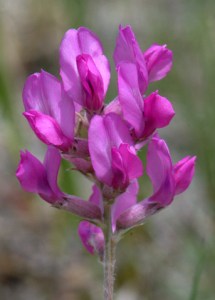 I was hiking on a nearby ranch last week when we came across some spectacular wildflowers. As I knelt to grab some photos, my plant expert companion remarked, “You know that’s locoweed. We should pull it out!”
 Specifically, a Penn State biologist named Tomas Carlo studied Japanese Honeysuckle (considered a noxious weed in much of the eastern US) and found that its presence increased the biodiversity of bird species as well as the number of individual birds. In fact, the fall berries are a major source of food for fruit-eating birds.
 More charmingly known as Butter-and-Eggs, the common name “Toadflax” applies to several similar species. All sport cheerful yellow flowers resembling snapdragons, to which they are related. Two-foot tall clumps of smooth green stems are covered with narrow, pointy leaves two and a half inches long. The flowers appear whenever growing conditions permit.
 Mountain Plover