
 Spring migration is over, and the birds are all focused on mating and raising their families. The weather is too darn hot outside to be enjoyable, especially when one is hauling binos, field guide, water, scope with tripod, notebook, lunch, and possibly a camera. Then, to top things off, the sun is coming up at an hour when even birders would prefer to catch a few extra zzz’s. The early birds can have their worms.
Of course, most of us won’t let a few inconveniences like that stop us from birding. Sure, we may have a bit less enthusiasm, but we’ll still traipse around in the hot sun if there is the possibility of seeing some birds. But wait. You don’t have to suffer in the heat. There are a few things we can do to make our excursions more bearable.
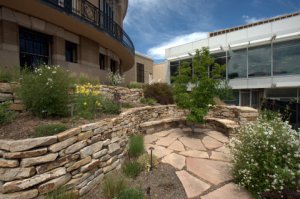 The Carnegie Library Garden may be one of downtown Colorado Springs’ best kept secrets. That’s a shame, because it is truly a gem. This is one of several public gardens featuring water-wise plants especially suited for our climate and soils. It was designed by landscape architect and master gardener Carla Anderson, and is maintained by a team of dedicated volunteers.
 Blossoms abound throughout the growing season. When I visited last month, red and yellow ‘Lena’ broom was beginning to fade, while several types of Mockorange were in full bloom. Rosettes of huge, fuzzy, silver Salvia leaves were topped with tall white or purple flower stalks, and brilliant Colorado Gold hardy gazanias were everywhere. An arbor with a built-in bench supports a beautiful pink climbing rose, while honeysuckle grows on up a nearby trellis. By the time you read this, new plants will be in bloom; it’s worth coming back for repeat visits.
 June isn’t a great time to go birding. In most parts of the country, territories are established, nests are built, eggs are laid, and the birds are either busy incubating those eggs or are run ragged trying to satisfy the insatiable appetites of their demanding offspring. Either way, the parents are being especially careful to hide the whereabouts of their progeny, making it very difficult for us birders.
 Vast open spaces, blooming yucca, and constant wind were our companions on a recent hike to Corral Bluffs, an area under consideration as a new El Paso county park.

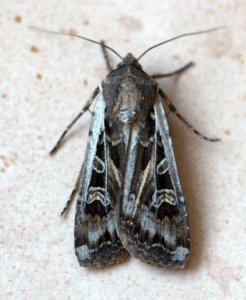 As I unlocked my mailbox to retrieve my mail, a cloud of wings billowed out of the opening. My bedside lamp is surrounded by a throng of fluttering insects leaving dark smudges on the lampshade. Every windowsill is littered with gray bodies. The final straw came a few moments ago when I opened the lid on the toilet and discovered a moth convention assembled on the seat. Yup, it’s Miller time.
 Mountain Plover