
 A (long) while back I posted Heidi’s list of auto-corrected bird names. I thought it was pretty funny, partly because most bird names are not normal words. What’s a spell-checker supposed to do when confronted with names such as Willet, Phalarope, or Gallinule?
Being both a birder and a gardener, I began to wonder how Microsoft Word would treat some of the more unusual flower names. Typing a quick list was quite revealing! Then, as I went to retype everything in WordPress, I discovered that they don’t use the same dictionary. In a few instances, it had its own list of suggestions, making things even more interesting!
 There are many places to look for birds in the Pikes Peak region. Take a hike around a mountain lake. Stroll around a mountain lake looking and listening for returning summer residents. Enjoy a hike in the aromatic junipers and scrub oaks of a foothill riparian area. Go higher in elevation and see what birds call the montane forests their home.
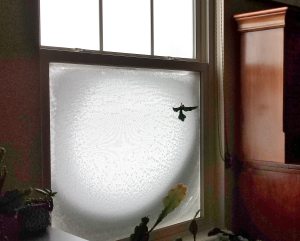 Today (as I write this) is officially the third day of spring, but you’d never know it here in Colorado. I can barely make out the house across the street through the snow hurtling by at up to 70 mph. Cottony clumps of white stuck to the window screen have totally blocked the view from my office (right). Those who can are staying home, businesses are closed, and schools would be too if the kids weren’t already off for spring break. The blizzard warning keeps changing. We can expect a mere 1 to 3 inches of snow. No, we’ll get 6 to 12 inches. And now they’re saying 8 to 16 inches with significantly higher drifts.
 Usually, Colorado’s seasons have little to do with the calendar. This may be the vernal equinox, but we still expect snow and it’s way too early to plant those tender flowers and veggies. After gardening in California for years, I’ve mostly adapted to the challenge here, but from March through mid-May I would drag around the house feeling frustrated that I couldn’t plant anything the least bit frost-tender.
 Who doesn’t like blue? With clouds of sky-blue, 5-petaled flowers that seem to float among the surrounding foliage, Blue Flax is a welcome addition to any garden. A perennial hardy to 9,500 feet, the fountain-shaped plants are comprised of graceful, wiry stems reaching two feet in height, and embellished with blue-green needle-like leaves.
 Last week I shared how to determine the make-up of your soil. This knowledge is helpful, but it doesn’t solve the problem of soil so hard, you can’t get a shovel into it. That’s what we’ll cover today.
 Mountain Plover