
 Once again, the blogosphere is full of recipes for weed killer, lawn restorer, insecticides, etc., all containing dish detergent. Most of them call specifically for Dawn, although I recently encountered someone promoting Joy instead. The most popular herbicide recipe includes vinegar and dish detergent. Some add Epsom salts. Others add plain table salt. It’s a supposedly “organic” or “natural” alternative to a purchased product.
Author: LAH
May Snow

A foot of snow. That’s what fell on my garden last week. Twelve inches of heavy, wet, icy snow covered our lawn, bent the branches on our trees, and broke the tender new shoots on my perennials. Yes, I had already planted annuals, but I put them in pots on our deck, which I hauled into the warm house when I saw the forecast. I managed to cover my lettuce and chard, which were already in the ground, but they’re reasonably hardy and did just fine, although they may still decide that they’ve endured a winter and it’s time to bloom, producing a flower stalk instead of the leaves I want. All things considered, however, we did well. Many of our friends and neighbors lost entire trees. I can’t complain.
Love Me Some Lilacs
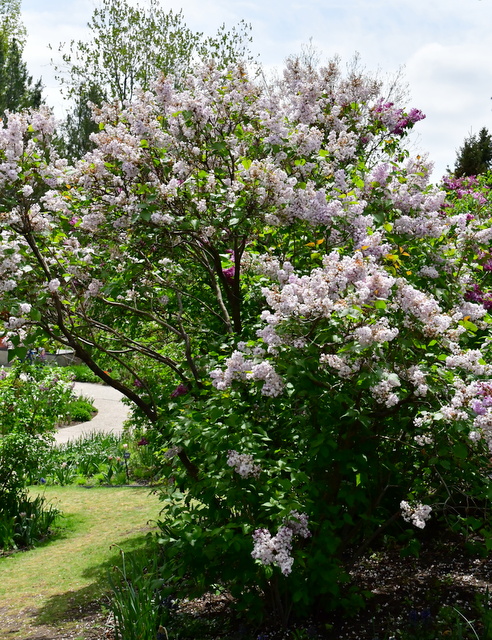
In the last week, two people in our local online gardening forum have asked for help identifying the mystery shrub blooming in their yard:
What’s a Weed?

A weed is…
- a wild plant growing where it is not wanted and in competition with cultivated plants.
- a plant that is not valued where it is growing and is usually of vigorous growth especially : one that tends to overgrow or choke out more desirable plants.
- a plant considered undesirable in a particular situation, “a plant in the wrong place.”
I subscribe to a variety of online gardening groups, mostly on Facebook. Lately there has been a lot of ranting discussion about whether or not dandelions are weeds. On the one hand, various gardeners are asking for help controlling dandelions in their lawns and gardens, often to please a landlord. On the other hand, various opinionated persons climb onto their soapboxes and extol the virtues of dandelion leaves, wine, and bee-friendly flowers, chastising anyone who would dare to disagree. (more…)
Limpkin
 The answer to last week’s quiz is… Limpkin. Did you recognize it? I almost didn’t!
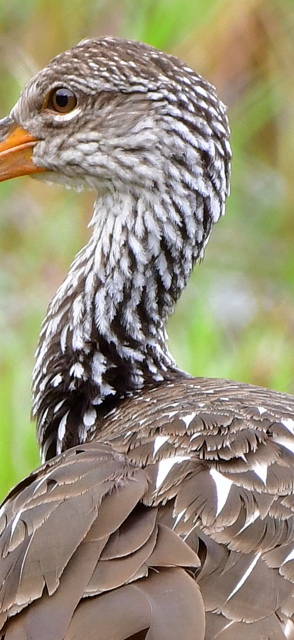
Here in the US, Limpkins are only found in Florida, although their range extends well into South America. It’s quite a plain bird, dressed mostly in brown with a few white spots, with a long, orange beak. Limpkins are so unlike other birds, this one species has its own family, Aramidae. It’s in the order Gruiformes, where you’ll also find rails and cranes.
In the Caribbean, Limpkins hang out in dry brushy areas. You can find them in the mountains of Mexico and Central America. Those in Florida, however, are normally found in freshwater wetlands. That’s because the Florida birds dine almost exclusively on apple snails, a very large species that lives in fresh water.
May Bird Quiz, Uncropped Photo
If you were stymied on Monday, now can you name this bird? The photo was taken in Florida last February. The answer will appear in Monday’s post.

Annuals for Bouquets
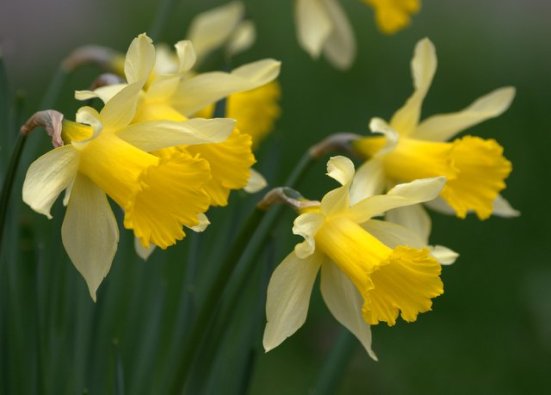
Every year in early March, Pete and I discover a FedEx package on our front porch. It typically arrives on a cold and blustery, perhaps snowy, day. It may be winter outside, but I know that spring will be found inside that box. I run downstairs, grab a large vase, and rush back to the kitchen, where I fill the vase with warm water. I eagerly tear open the package. Then, carefully extracting the bundles of flowers from the box, and sliding the rubber bands off to separate them, I snip off the ends of each stem with a pair of kitchen scissors and arrange the as yet unopened daffodils in the vase. Thanks to some wonderful friends, over the next week or so, cheerful yellow flowers will provide the perfect antidote for Colorado’s late springs.
May Bird Quiz
This bird was photographed in Florida in February. Can you name it? I will post the uncropped photo on Saturday, giving you one more chance to identify the bird. The answer will appear at the end of next Monday’s post.
Cool Beans


When we think of legumes, we think of peas and beans, but those common foods are just the beginning. The pea family (Fabaceae or Leguminosae) is the third largest family of plants, with somewhere between 13,000 and 19,000 species (botanists disagree) that range from large trees to sprawling vines to shrubs and small forbs. They may look quite different from one another, but a careful examination will reveal a number of similarities, making the members of this fascinating family fairly easy to identify.
Critters in Trees
 Birders spend a lot of time looking in trees. Of course, we’re hoping to see birds, and often we do. But birds aren’t the only animals that live in trees. And, while I get a thrill spotting a less-than-common bird among the branches, I also get rather excited when it’s a less-than-common mammal—or other creature.
 Besides the birds, what do I see in trees? Squirrels! It’s a rare birding trip when we don’t spot at least a couple of squirrels, and typically there are plenty more. Here in the Colorado Springs area, by far the most common species is the Eastern fox squirrel, which some idiot nostalgic person from the East introduced to Colorado during the 1940s. Fox squirrels spend their time sneaking around urban yards, emptying bird feeders and chewing up grill covers and the fabric cushions of our patio furniture.
 Mountain Plover