
 If you could go birding anywhere in the world, where would you go? That was the question my husband asked when he presented me with a pile of frequent flyer miles and credit card points for my 60th birthday. There are so many choices, but after months of careful research, I chose Australia. I wasn’t disappointed. Birding Australia was truly a once-in-a-lifetime experience.
After far too many hours in the air, we landed in Sydney just as the sun was setting. Our friends picked us up and drove us an hour or so west to their home in the Blue Mountains, where we planned to stay for a week. Exhausted from the flight, we went straight to bed. But early the next morning, lying in the predawn dimness, I heard a chirp. And then another. A bird started singing, and was quickly joined by several more. A minute later I was up, dressed, and downstairs with my camera, binoculars, and Field Guide to Australian Birds. I was in Australia!


 The tree had clearly expired. What leaves remained had turned a sickly yellow-brown, and hung limply on the branches—in mid-August! Yet, when our neighbors planted it last year it had been perfectly healthy. Something was obviously wrong, and I had a hunch I knew what. (I’ve often said that master gardeners kill just as many plants, we just know why they died.)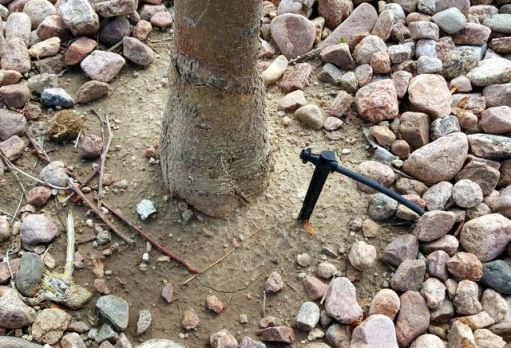

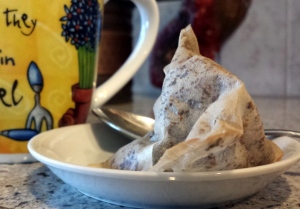 It seems such a waste—we use a tea bag to make a lovely cup of tea, and then toss it into the trash. It just screams to be repurposed—surely there’s some way to get some extra use from that depleted bag! So it’s no big surprise that the internet is suddenly full of lists with titles such as “7 Random Uses for Used Tea Bags.”
 The black spider crept across the basement floor, venom glistening from its deadly jaws. While the unsuspecting heroine rummaged through some boxes, the spider crept closer, and yet closer, until…
 We all know what a chicken egg looks like—hard shell, gooey clear stuff inside that turns white when you cook it, yellow yolk in the middle. You may have noticed that twisted “umbilical cord” and maybe you fished it out before frying your breakfast. If you break an egg into a bowl, you’ll find that the white (the albumen) has a thicker part around the yolk, and a thinner part further out. And if you’ve ever peeled a hard cooked egg, you might remember two layers of translucent membrane just inside the shell—removing them as you go makes it easier to get the shell off.
 Mountain Plover