
 Your knees were creaking and your back was aching, but your bulbs were now nestled in their holes, safely underground, waiting for spring. All winter, with its bare branches and mono-colored landscape, you dreamed of sunshiny daffodils, pastel hyacinths, an entire palette of tulips. Then, finally, the weather warmed and the first green leaves appeared. With mounting anticipation, you checked the daily progress of those early flowering bulbs. And then—finally!—the buds appeared, the flowers opened… and flopped over.
Author: LAH
Gifts for Bird Lovers
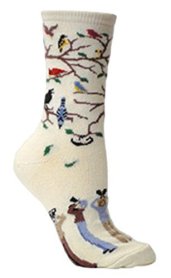 Thanksgiving is past and we’re fully into the frenetic holiday shopping season. Birding websites and magazines will be running lists of gift ideas for birders—new binoculars, field guides and apps, birding accessories, etc. As a birder myself, I would certainly love to receive one of these items, but most of them are pretty expensive.
I’ve created a (very short) list of bird-related gifts which won’t break your wallet (they’re all under $25), ranging from silly stocking stuffers to practical clothing. These are just the beginning, a source of inspiration, as there are hundreds of bird-related gifts just waiting to be discovered.
Welcoming Juncos
 I just added bird #19 to my yard list. That may not sound like very many, but we only moved into our new house in May, and we had no landscaping until August. Birds are rarely attracted to bare dirt!
Not surprisingly, #19 was a Dark-eyed Junco. Vertical migrants, Juncos spend the summer up in the mountains, nesting in the conifers, and descend to lower elevations for the winter. At 7,100 feet , our house barely qualifies as a lower elevation; the park up the road, a mere 200 feet higher, hosts juncos all year.
Green Leaves, Red Berries, Kinnikinnick!
 Looking for year-round beauty and a plant that can handle a northern exposure, I planted six bearberries (Arctostaphylos uva-ursi) in our front yard this summer. Also known as kinnikinnick, bearberry is a good choice for Colorado, where it is native to the foothills and mountains. So far, I’m delighted to report that the plants are thriving. In fact, I can see a few green leaves poking up through the two feet of snow we got this week!
For our front yard, I wanted some plants that would stay green all year. Picking a few conifers was easy, even without resorting to junipers (which are not among my favorites!). Hoping for some variety, I wanted broadleafed evergreens too, and there aren’t many to choose from.
15 Birdy Things to Do When You Can’t Go Birding
Today I was going to write a post about the birding excursion I had planned for the weekend. I expected to show colorful ducks, tricky-to-ID waders, and perhaps some cute little songbirds I saw skulking in the nearby bushes. However…
 I sprained my ankle last week. I wish I had a good story to relate, but I simply thought the ground was where it wasn’t. (Happily, I landed between the two thorn bushes!) As you can see, the bump was pretty impressive but the x-rays proved nothing was broken; now it’s simply a matter of time and patience. I’m sitting around with my foot elevated, popping anti-inflamatories and catching up on Facebook. I have to get better soon—our kids and grandkids are coming for Thanksgiving!
My Pine Has Brown Needles!
We all know that deciduous trees—oaks, maples, and the like—lose their leaves in the fall. But what about conifers? They’re supposed to be evergreen! Should we be worried if we see lots of brown needles on our pines and firs?
 As is frequently the case with questions about gardening, the answer is “it depends.”
November’s Quiz: Answer
To refresh your memory, here is the photo from November’s Bird Quiz. The bird was seen in New Mexico during the month of January. Don’t read any further if you want one last chance to identify this bird.
White Frost, Green Leaves
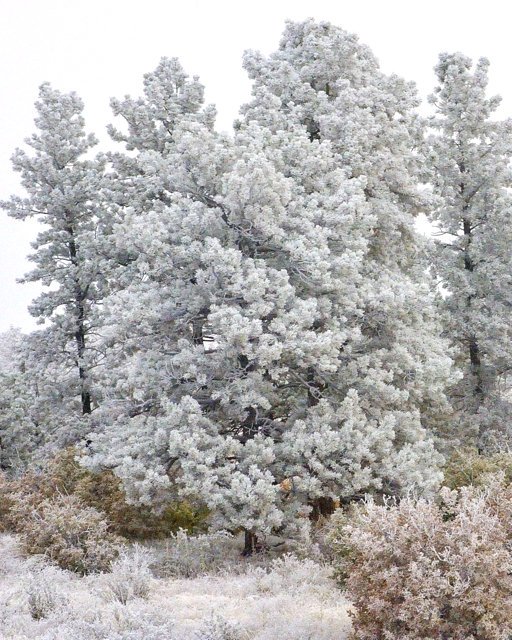 We’ve been enjoying some glorious autumn foliage these past few weeks, but there are plenty of plants that remain stubbornly green. In fact, their leaves stay green no matter what the season—that’s why we call them evergreens. With winter just around the corner, I began to wonder—how do evergreens survive our cold winters? Why don’t they lose their leaves?
November’s Bird Quiz
Can you identify this bird? The photo was taken in New Mexico during the month of January. The answer will appear next week.

Kintzley’s Ghost is Hauntingly Beautiful
 You’ve put out the jack-o’-lantern, there are mysterious eyes blinking in the hedge, and spider webs festoon the front porch. It’s almost time to greet thus year’s trick-or-treaters. You think you’re ready, but there’s a good chance that you’re missing the pièce de résistance, the perfect, spooky vine to frame your doorway. You need to plant Kintzley’s Ghost honeysuckle!
This 2006 PlantSelect™ winner is the perfect plant for Colorado gardens, and not just because of its Halloween-evoking name. A cross between two Midwest natives, Lonicera reticulata (Grape Honeysuckle) and L. prolifera (Yellow Honeysuckle), this hybrid depends on weekly watering in more arid regions. Plants are hardy in USDA zone 4 through 8. Not fussy about soil, they thrive in full sun, but also tolerate afternoon shade. Another plus—the blue-green foliage is deer-resistant.
 Mountain Plover