Do I Need Some Fungi?

Amanita-type mycelia

I was thumbing through a gardening supplies catalog, looking at the assortment of “things you can spend your money on that your plants will probably do fine without” when my eye was caught by an offer for “mycorrhizae.” The catalog was extolling the many virtues of this fungal spore mix—it would improve plant health, make the plants more drought resistant, increase yields, protect against diseases, reduce the need for fertilizer, and cure my great-aunt’s bunions, all for $16.95 per pound.

It sounded too good to be true, so naturally I was highly skeptical. (It also sounded pretty expensive until I learned that you apply it by the teaspoon. Phew, not so pricey after all!)

(more…)

Bird Quiz #2: Answer

To refresh your memory, here again is the photo for Bird Quiz #2. Read no further if you still want to have a shot at identifying this bird.

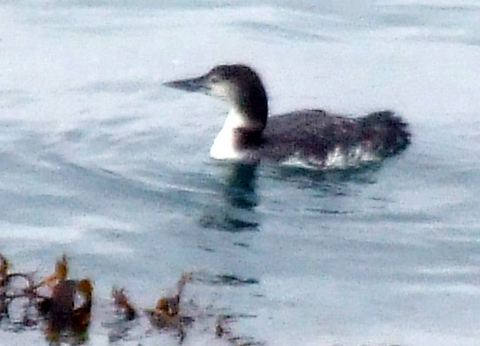
quiz-2-1aI saw this bird in Santa Cruz, California in February. We were standing on the sea wall north of the pier, scanning the ocean for anything interesting. I took the photo through my scope in hopes of getting a better look, then pulled out the field guide.

(more…)

My Favorite Lettuce Varieties: Butterhead

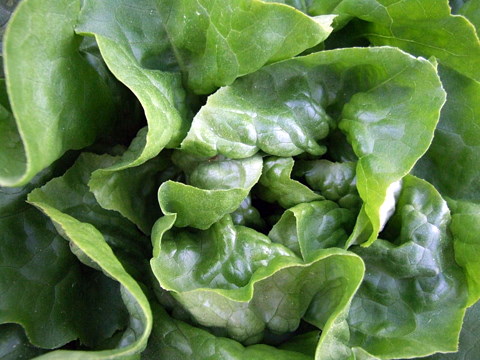
lettuce-butterhead-blkforestco-5junt07-lah-006Butterhead (aka bibb) lettuce, with its smooth, soft leaves and loose heads, is by far my favorite kind. It’s also rather pricey in the stores. I probably plant twice as much butterhead as I do all the other varieties combined.

I’ve been hunting for a butterhead that is big, holds for several weeks at maturity, resists tipburn (a problem with our hot, dry, windy weather), and is tender and flavorful—a pretty tall order. I finally came up with a winner, but let me first tell you about the also-rans.

(more…)

Bird Quiz #2

(Make sure you also saw Bird Quiz #1 last month!)

Can you identify this bird? The photo was taken in Santa Cruz, California in February. This is exactly how I saw it from shore though my binoculars. The lower photo is cropped and enlarged in hopes of showing more detail. Sorry for the poor quality, but this is what I had to work with. My answer will appear next Monday.

quiz-2-1

quiz-2-1a1

Scheduling Seed Starting

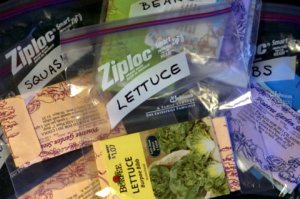
seeds-in-baggies_lah_6137If you ordered your seeds from a catalog, chances are those seed packets are beginning to arrive at your house—an entire garden, in one padded envelope! After you’ve opened the package and checked to make sure they included everything you ordered, (or if you’ve bought your seeds at your local garden center), what should you do with those seeds?
I used to just toss the packets into my seed-holding shoebox and hope I would remember to start them at the right time. Now I take a little time to get organized before spring planting really gets underway.

(more…)

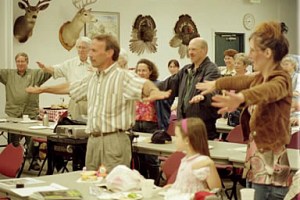
Join the Club

may_meeting1rev

Do you want to be a better birder? Would you like to meet more people who share your interest? Are you curious about some near-by birding hotspots, but you’re not sure exactly where they are, or how to get there?

While birding is fine as a solo pursuit, there are times when hanging around other birders is just a lot more fun.

One day, about eight months after I first became interested in birds, I was finishing up a walk around the ponds at our local nature center. I stopped by the visitor center to see if anything special had been sighted recently. The volunteer behind the counter saw my binos and asked if I was a birder.

(more…)

CSU Veggie Trials

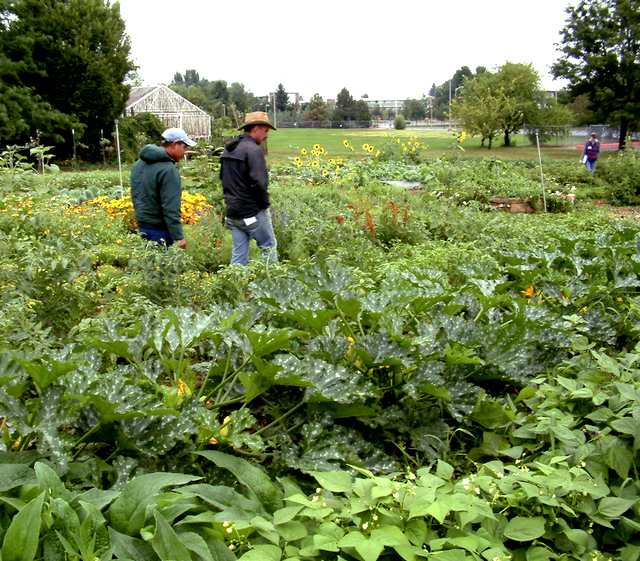
veggie-garden-student-run-csu-perc-lah-094-nx-1How many times do we read a description in a seed catalog, order the seeds, then find ourselves disappointed with the results? Our Colorado climate and soil conditions make for some challenging gardening, and varieties that thrive in other parts of the country just don’t do as well here.

Thankfully, we have a state university providing us with research-based information especially suited to our high and dry gardens. From 2004 through 2008, CSU trialed an assortment of potential commercial crops, comparing varieties to discover which, if any, do well here. The results are available on their website under the heading “The Rocky Mountain Small Organic Farm Project.”

(more…)

Valentine Finches

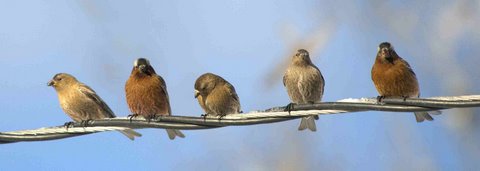
rosy-finches-on-wire_lavetaco_20100320_lah_0036nef

In honor of Valentine’s Day and all things pink, today’s post features Rosy-finches.

There are currently three species of Rosy-finch. The most widespread are Gray-crowned Rosy-finches (2nd and 5th in photo above), which winter in the inter-mountain west and breed throughout interior British Columbia, Alaska and the Yukon.

Next are Black Rosy-finches, which have a more restricted range, being found throughout the central Rockies from southern Montana to northern New Mexico, and east into Idaho and Nevada.

Then there are the Brown-capped Rosy-finches (Nos. 1, 3, and 4 above, and all 3 birds below), which are only found from southern Wyoming though Colorado to northern New Mexico.

(more…)

Do You Have a Bleeding Heart?

dicentra-spectabilis-bleeding-heart-dbg-lah-007Has the fat little cherub with the bow and arrow left you lonely this Valentine’s Day? If no one will be sending you roses, why not buy yourself a Bleeding Heart?

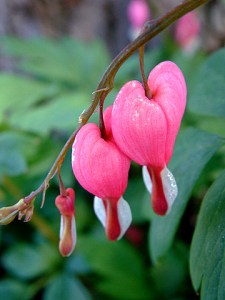
Bleeding Heart (Dicentra spectabilis) is an old-fashioned perennial aptly named for the row of heart-shaped flowers  that dangle along each wiry flower stalk. Airy leaves in sprays reminiscent of a coarse fern appear in early spring, rising on stems that form a clump that can reach two to three feet, given the right conditions.

(more…)

Birder Heaven: Sabal Palms Sanctuary

sabalpalms-brownsville-tx_lah_4301I was a woman with a mission. On our previous trip to southern Texas (five years ago) I had added the Ringed Kingfisher to my life list, but the Green Kingfisher eluded me. In the following years, I’d hiked miles of southern Arizona, following tips from local birders, but still—no Green Kingfisher. Now that we were back in Texas, I was determined to not only see one, but photograph it as well.

With that goal in mind, we headed to Audubon’s Sabal Palms sanctuary. Situated near the mouth of the Rio Grande, mere yards from the border, this sanctuary protects one of the few remaining groves of sabal palms and the associated habitat. Plenty of trails lead through the thick undergrowth, and you can walk out to the edge of the river and gaze across at Mexico.

(more…)