Starting Seeds: Light

If you’ve ever tried growing seeds indoors, you may have ended up with tall and spindly plants, flopping over, adorned with pale leaves. When planted outside, these ungainly wisps quickly succumb to bright sunlight and the gentlest of breezes. What’s a gardener to do?

While overabundant food and water, coupled with too-warm temperatures, contribute to this problem, the primary culprit is insufficient light.

The crops most commonly grown in our veggie gardens all require full sun—at least eight hours per day. Likewise, bright light is essential for producing stocky seedlings with healthy green leaves.
(more…)

Starting Seeds: Soil and Water

Do not start your indoor seedlings in soil.

Does that surprise you? Yet, even good garden loam is not the best choice for growing transplants.

For one thing, soil is more than just dirt. It is full of micro-organisms such as nematodes, bacteria, and fungi. Out in the garden, they keep one another in check. Indoors, it’s another story. One of the most common causes of seedling failure, “damping off” is a disease causes by a fungus. Once infected, it is fatal to the baby plants. The only hope is prevention.

You do have the option of sterilizing your garden soil. You can bake it at about 250º F for several hours. That will kill all those nasty diseases. It will also create a stench in your home. If you want to stay on good terms with your housemates, this is not the best way to go.

(more…)

White on White

We had several inches of snow last night. The fields are white. The driveway is white. In fact, pretty much the only color outside is… white. At least right now the sky is blue.

Now tell me—why do we plant early bulbs with flowers that are white? If snowdrops came in scarlet and crimson, I’d be first in line to buy some. At least crocuses come in yellow and lavender.

At least daffodils are yellow!

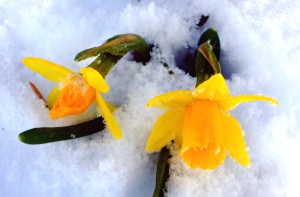
My favorite early bloomers are Tête-à-Tête daffodils. Their intense golden yellow color is just what I need after a winter of muted pastels and dead brown. They shrug off each Spring storm, emerging from the melting snow with all their bright cheer unscathed.

I’m sure white flowers have their place. There’s nothing like an all-white flower garden seen by summer moonlight. I like white daisies and white baby’s breath. But at this time of year, when everything in me yearns for color, growing white flowers makes no sense at all!

Starting Seeds: Containers

Raise your hand if you remember starting seeds in elementary school. Perhaps they sprouted in the cells of a cardboard egg carton. Sound familiar? Now, did your seedlings grow and thrive? Hmm, thought so. Granted, you probably forgot to water them, or you dropped the whole shebang on the way home from school. But it wasn’t all your fault. Egg cartons make awful seed starting containers.

What should you use to start those little seedlings? There are a number of excellent choices. Suitable containers share several attributes.

(more…)

Starting Seeds: Seeds

You’ve decided to grow your own transplants this year. You’ve checked your average last frost date, so you know when to start. Now it’s time to think about seeds.

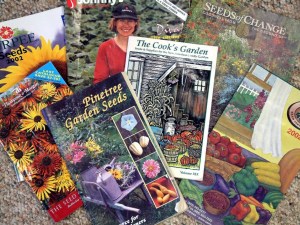
catalogs-lahThe seed catalogs that arrived around the first of the year are now well-worn, with pages dog-eared and varieties circled. I spent blissful hours going through every one, comparing glowing descriptions and luscious photographs. Having a pre-determined planting list[1] and budget helped me exercise at least some self control. I finally made my order about a month ago, which is much later than usual. Now I’m haunting the mailbox, waiting for my seeds to arrive. Next year I’ll make a point of ordering in January, so I’m prepared when spring comes.
(more…)

Starting Seeds: Timing

Crumbly potting soil, warm water, tiny seeds—I love starting my veggie garden. Even though we had almost a foot of snow two days ago, I was happily planting lettuce and tomatoes, peppers, broccoli, kale and cabbage. When your growing season is as short as mine is, it’s essential to start many crops indoors.

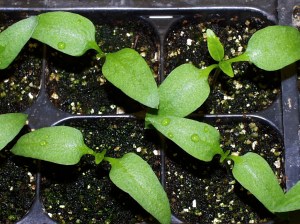
pepper-cotyledons-vs-leaves-lahOf course, you can buy started seedlings at your local garden center. But where’s the fun in that? I prefer to take advantage of the wider selection of varieties found in the seed catalogs. I want seedlings that are stocky and healthy, not leggy and root-bound. Plus, there’s a certain satisfaction in knowing that you grew your plants yourself.
The first step to success is planning. What is the average last frost date for your area? You can ask a gardening friend, contact your local Master Gardener help desk, or check the Farmer’s Almanac website.

(more…)

A Garden for the Birds

The following article was first published by the Colorado Springs Gazette on March 21, 2009:

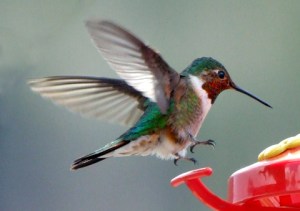
broadtail-hummingbird-keystone-20may07-lah-837rA brightly colored hummingbird zooms past on its way to a feeder. A finch fills the air with music. Birds provide us with hours of entertainment. How can you welcome more wild birds into your yard?

Like other animals, birds have a basic need for five essential elements: water, food, shelter, safety from predators, and a place to raise their young. While it’s fun to provide bird houses and feeders full of seed, you can design your landscape to offer these necessities and truly give yourself a yard for the birds.

(more…)

Growing Minor Bulbs

In my previous posting, I described a number of so-called “minor bulbs” that can have a major impact in the late winter garden. This time, I’ll focus on how to grow them.

Allium
Allium

You have to plan ahead to enjoy these little beauties. They all need to be planted in the fall, early enough so that they put out some root growth before the ground freezes. Most aren’t easy to find at local stores, and must be ordered from a catalog or online. I prefer to make my decisions on next year’s order while this year’s plants are in bloom.

Unlike the giant hybrids, these bulbs should increase year after year. Since they will be left undisturbed during that time, preparing the soil before planting is especially critical.

(more…)

Minor Bulbs, Major Impact

Iris hyb_HAS-ColoSpgs-CO_LAH_6429.nefNothing lifts our spirits like the first crocuses of spring. They are popping up all over town, like bright Easter eggs in our dreary gardens. After months of plants that are brown and lifeless, spring blooming bulbs are an almost magical treat.

Everyone is familiar with tulips and daffodils, and crocuses and hyacinths are recognizable as well, but the assortment of bulbs available to high altitude gardens extends past these familiar flowers. The following flowers are classified as “minor bulbs,” perhaps due to their diminutive size, but they can have a major impact when planted in large enough numbers.

Snowdrops (more…)

Foiling Flickers

BAM BAM BAM BAM BAM! My story about flickers was fictionalized, but based on personal experience. Last spring, flickers really did invade our home.

By August, my husband and I realized we’d nailed scraps of wood across 15 large flicker-sized holes. Piles of fluffy insulation littered the ground beneath each one. That fall we replaced much of the cedar siding on our house, to the tune of over a thousand dollars. The question became critical: What could we do to prevent the birds from drilling into our new wood?

A lot of people must be having the same problem. A quick web search turned up plenty of suggestions, but not much in the way of success stories. Inflatable owls don’t work—the birds are smarter than that. Flickers quickly become accustomed to hanging strips of aluminum, Mylar balloons, and small colored windmills. What else could we do?

(more…)