
Dirt is fascinating. Oh, I know, you’re thinking of the dirt you wash out of your clothes, or off your car. I don’t find that kind of dirt very exciting at all. But the dirt in a garden is a whole ’nother story!
 Actually, dirt is just one component of what gardeners prefer to call “soil.” Rocks weather and break down into smaller rocks, pebbles, gravel, and finally sand and silt. These tiny particles mix with organic matter—decomposing plants and animals—called “humus.” Then there’s air, and water. Add in weed seeds, worms, bugs, and a huge variety of microorganisms, and you have the living stuff in which we plant our gardens.
 Carrots, on the other hand, are usually planted a week or two before the average last frost date. The cool temperatures and snow-damp soil help keep the seeds from drying out during the three weeks it takes them to germinate.


 They’re jumping up all over the place— miniature flowers with elfin faces, surrounded by petals of yellow and purple. No wonder we call them Johnny Jump-ups! The petite plants, sporting elongated heart-shaped leaves, must have started growing as soon as the ground thawed, to be in bloom this early.
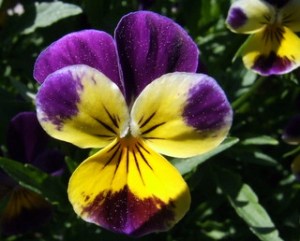 These short-lived members of the violet family are not particular about soil, exposure, or water. However, for maximum bloom, grow them in full sun, and don’t let them get too thirsty. Skip the plant food, as too much fertility will encourage leaves at the expense of flowers. For a mid-summer repeat performance, trim back leggy plants. Prolific self-seeders, new plants quickly replace those that succumb to old age, and they will form a solid mat in a year or two.
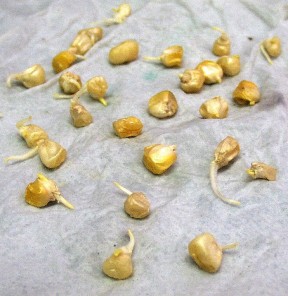 Vegetable seeds will germinate with or without soil. All they really need is an infusion of water to swell the seed coat, and sufficient warmth to signify spring. In fact, seeds for our most commonly grown food crops are among the easiest to start. They will begin their growth on a paper towel, a bed of agar, or even while still inside the fruit where they were formed! The home gardener can put this fertility to good use.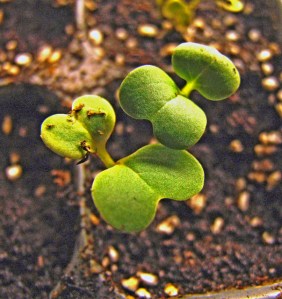
 Mountain Plover