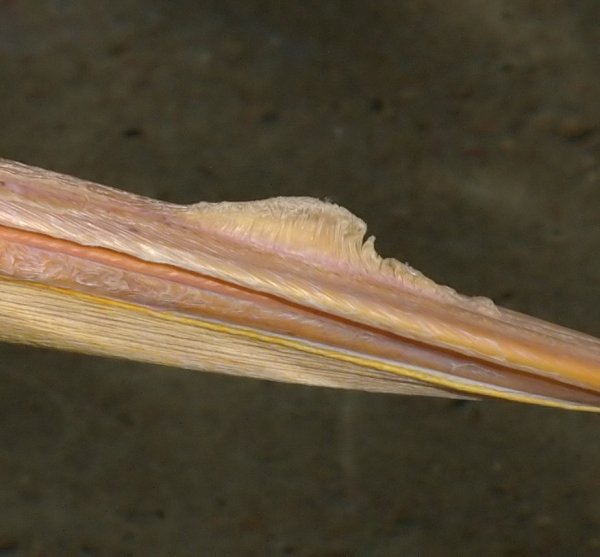
If you were stymied on Monday, now can you name this bird? The photo was taken at the Denver Zoo in October. The answer will appear at the end of next Monday’s post.


If you were stymied on Monday, now can you name this bird? The photo was taken at the Denver Zoo in October. The answer will appear at the end of next Monday’s post.
Can you name this bird? The photo was taken at the Denver Zoo in October. I will post the uncropped photo on Saturday, giving you one more chance to identify this bird. The answer will appear at the end of next Monday’s post.

It’s a brand new year, and we’re celebrating with old traditions. Were you up late last night? Did you watch the Rose Parade this morning? Did you make resolutions? Did you decide what bird lists you’re going to keep this year?
Starting a new list, or setting a year goal, has a lot to recommend it. Birders are often passionate collectors. We’re no different from someone who collects stamps or teapots—we just collect birds, accumulating a life list. (And we don’t have to find space for our collection, or dust it.)


_____
Belted Kingfisher, Ring-billed Gull, Gray Catbird
 Here we are, down to the wire. Christmas is on Monday. Hopefully you’ve finished up all the “should do’s” and now have time to enjoy the “want to do’s”—spending time with loved ones, enjoying the neighborhood decorations, munching Christmas cookies and drinking hot chocolate, and contemplating the reason we celebrate in the first place.
However, if you’re still scrambling for gifts, I can help you with some suggestions for the birder and/or gardener in your life. All of these are last minute approved, and all should fit into the budget no matter how much you have left to spend.
 New Delhi is a huge city of over 21 million souls. If I had to describe it in one word, it would be “intense.” The colors dazzle, the horns blare, and the food can sear your taste buds. We were there in early November, when farmers in the surrounding states burn their fields. The air was thicker than pea soup, visibility could be measured in tens of feet, and schools and factories were closed. I only had a few days to explore, while Pete was in meetings, so of course I went birding. Breathing is highly overrated.
Having walked for hours through the Oklah Bird Sanctuary the day before, my 20-year-old companion and I were hoping for more convenient location closer to downtown and our afternoon meetings. Someone suggested Lodhi Gardens, so off we went.
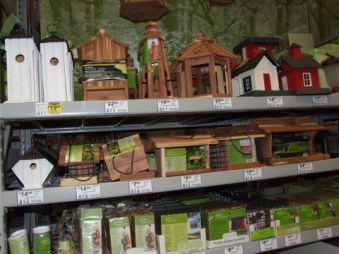 There are about a zillion bird feeders on the market. They come in a huge variety of shapes and sizes. They’re made from anything from plastic to wood to gleaming copper. Some hang from supports or tree branches, others perch on posts, attach to deck railings, or are anchored at ground level. Some feeders are designed to attract squirrels and others claim to exclude them. There are feeders to match every kind of seed, from tiny nyjer to peanuts in the shell, plus specialized feeders for corn cobs, suet, meal worms, jelly, fruit halves, and sugar water. With so many to choose from, how can one possibly decide which is the perfect feeder to buy? (more…)
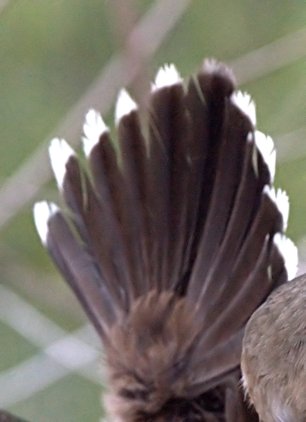
If you were stymied on Monday, now can you name this bird? The photo was taken in Texas in January. The answer will appear at the end of next Monday’s post.

Can you name this bird? The photo was taken in Texas in January. I will post the uncropped photo on Saturday, giving you one more chance to identify this bird. The answer will appear at the end of next Monday’s post.
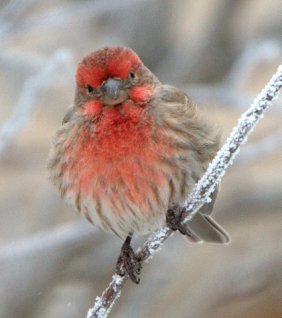 The summer birds have all departed for southern climes or lower altitudes. Many of our human friends have done likewise. Those of us who remain are simmering soup, digging out winter clothes and making sure our homes are snug and warm. The birds who hang around all winter have the same needs—high energy food, winter clothes and snug, warm homes.
We can’t help much with the wardrobe—birds already have down jackets! When they get cold, they simply puff up their feathers, trapping warm air against their bodies. This works remarkably well—until the wind kicks in. And we have a lot of wind.

